
Last updated November 21, 2026
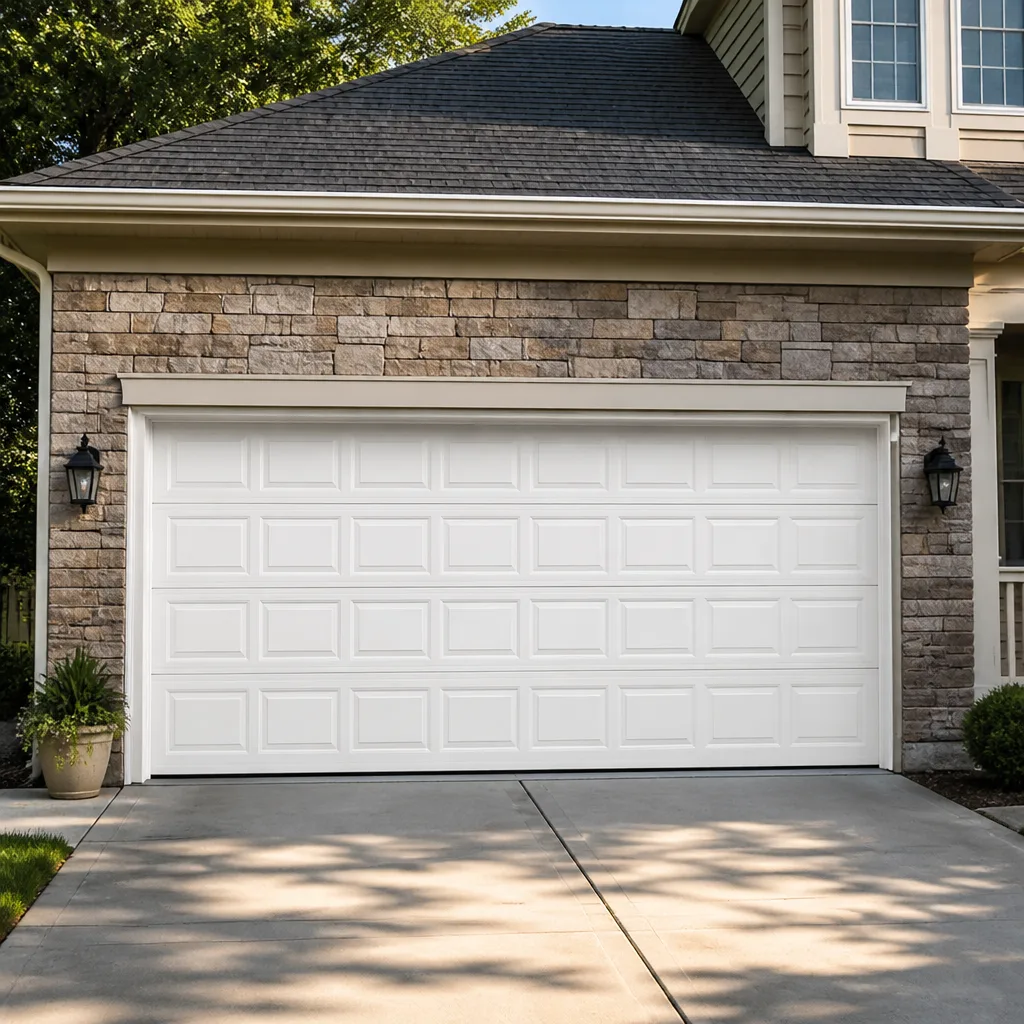 Raised-panel steel
 Carriage house
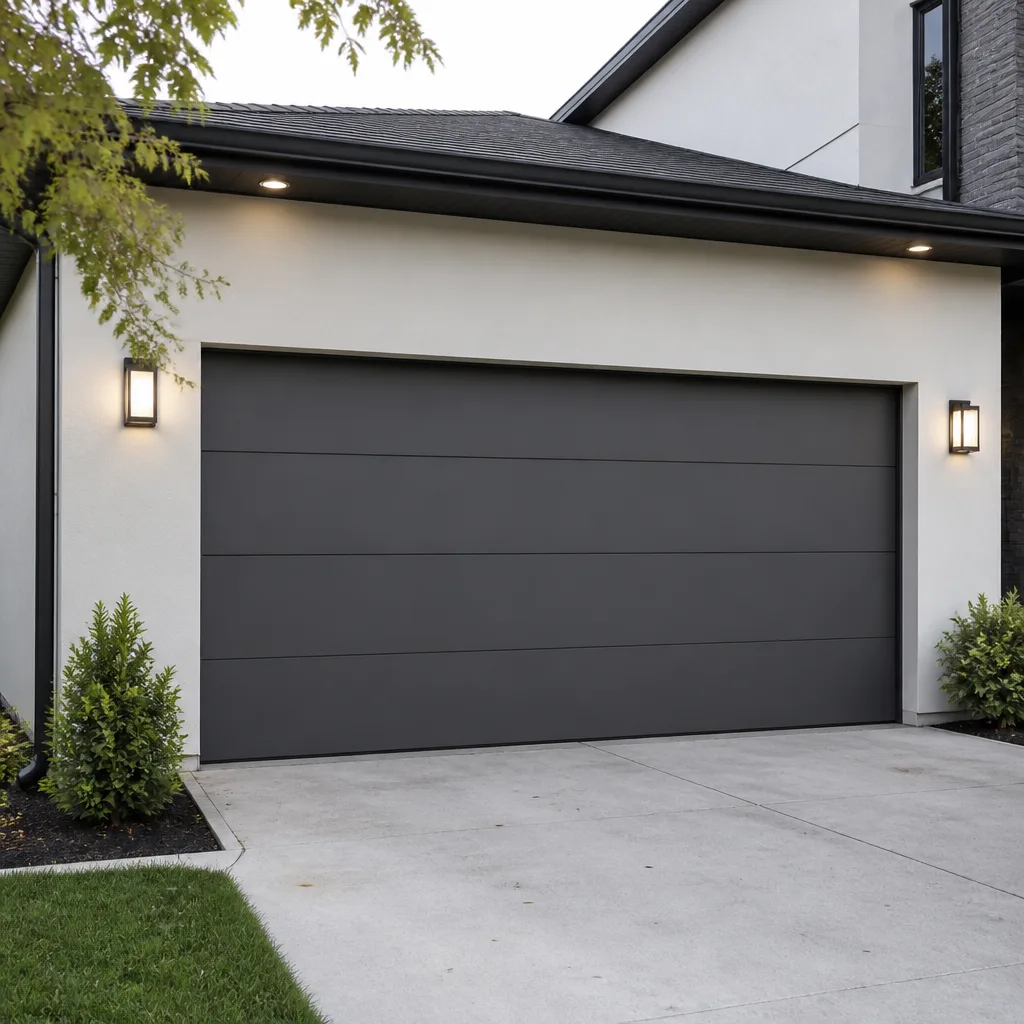 Modern flush
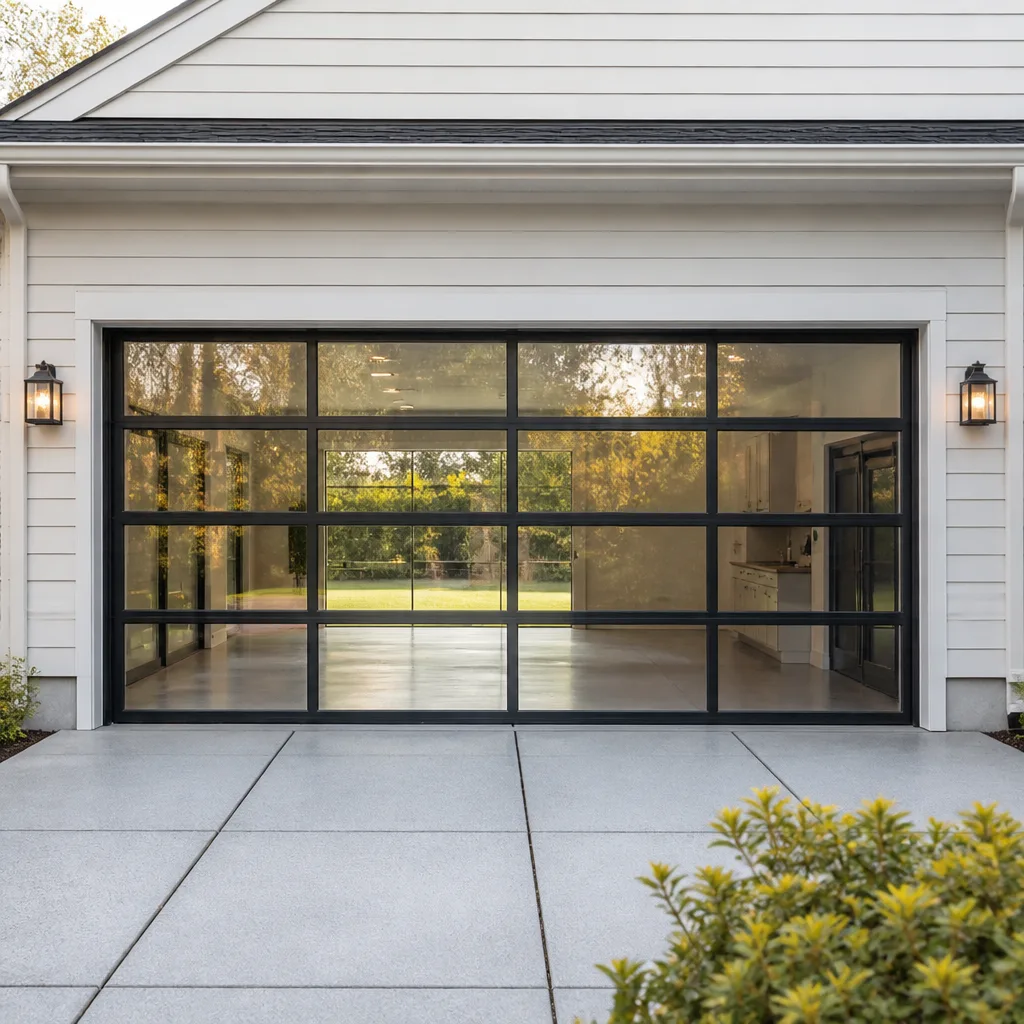 Full-view glass
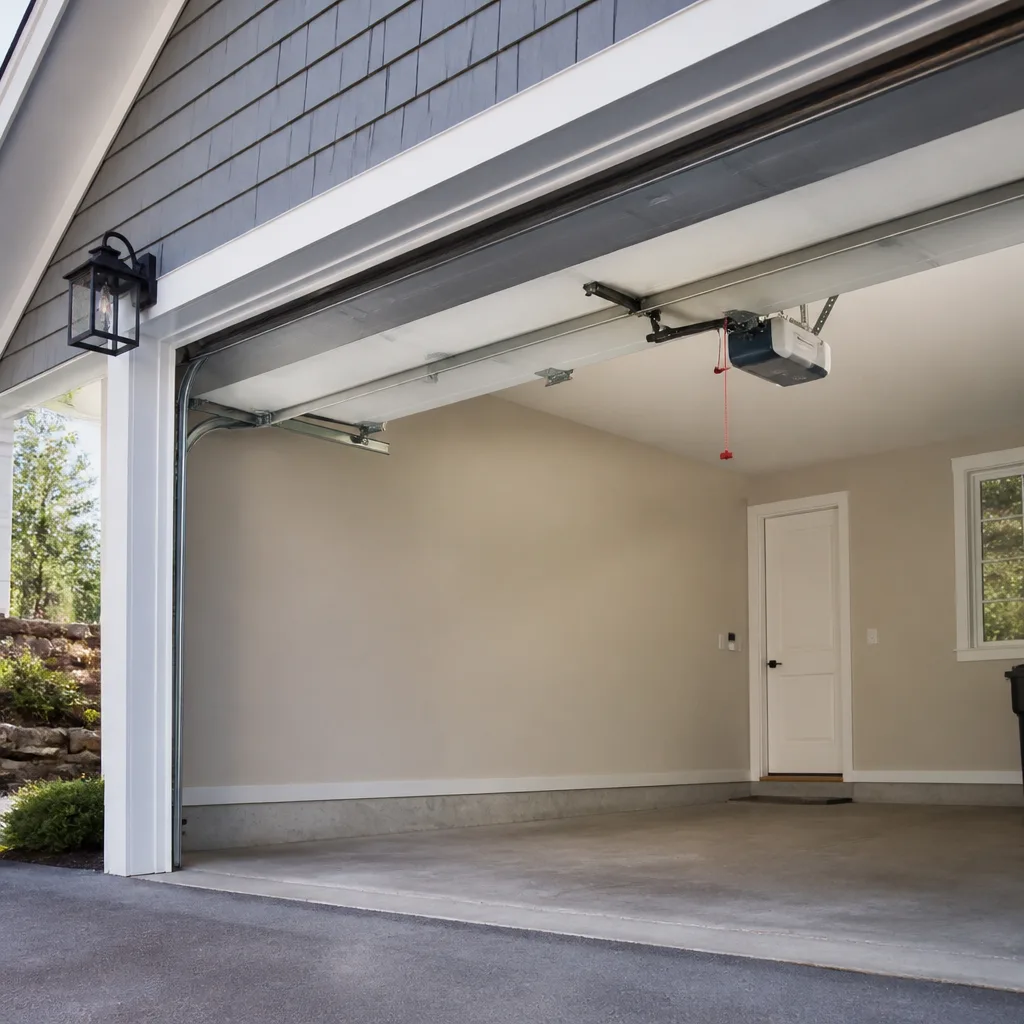 LiftMaster openers
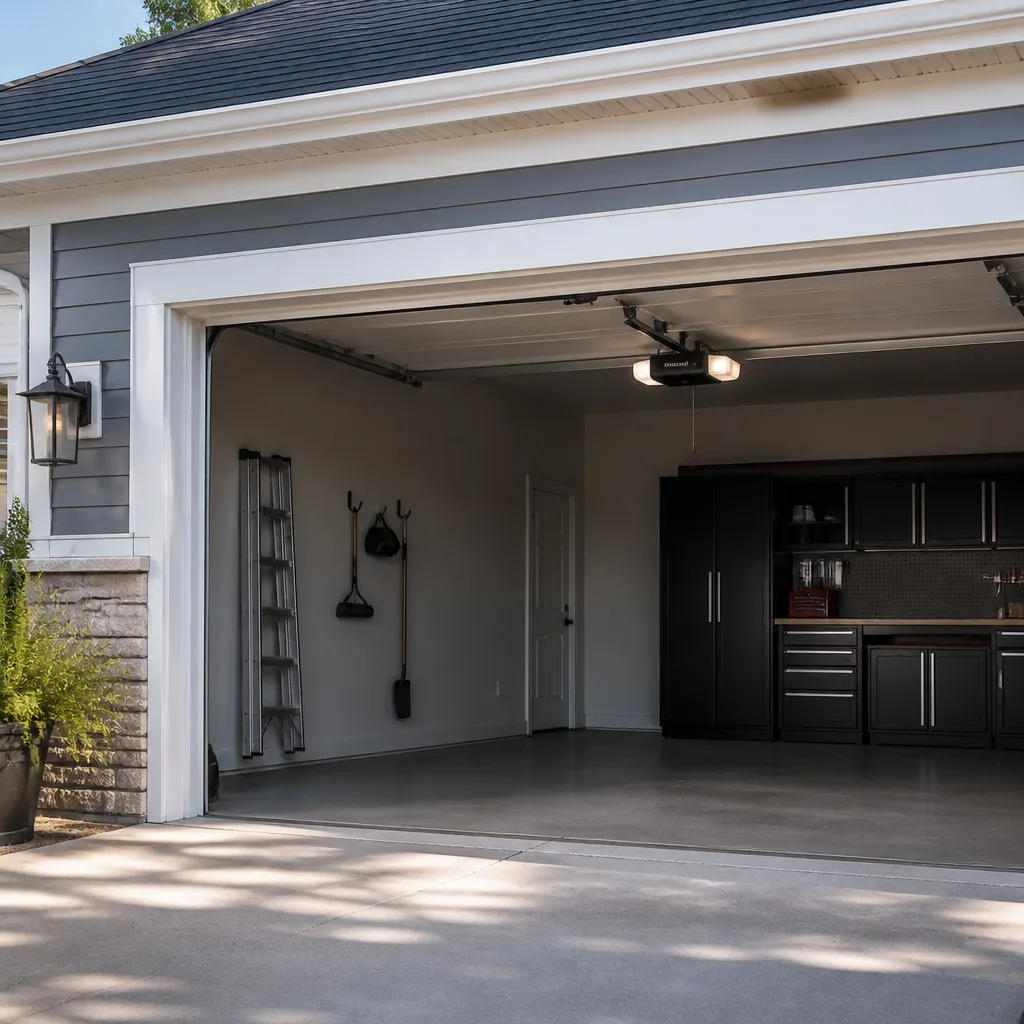 Chamberlain openers
Full 25-point door and opener safety check with every visit - springs, cables, rollers, tracks, and your LiftMaster or Chamberlain opener included
You get a price before we start. It does not change when the pro arrives.
Get your free estimateGarage Door Warning Signs: A Mandarin Homeowner’s Reference Guide
A garage door that hesitates for half a second before it moves isn’t “getting old.” That pause is a signal, and it usually points to a spring or cable tension problem that’s out of balance right now. That matters because a small correction today is a straightforward job, while the same imbalance left alone can turn into a snapped cable or a bent track that takes the door out of service entirely. Most warning-sign write-ups stop at “the door won’t open,” which is the end of the story, not the beginning. This guide is written for homeowners in Mandarin who want the early signals: the specific sounds, the measurements you can take yourself, and the visual cues that map to actual component problems.
Quick Answer
The earliest garage door warning signs in Mandarin are a half-second hesitation before the door moves, a grinding or popping sound during travel, rust blooming on the torsion springs, a door that lifts unevenly (check the gap at the bottom), and an opener that sounds strained or runs slower than it used to. Any one of these means something is wearing or out of balance. Catch it early and it’s a repair; ignore it and you’re looking at a spring, cable, or track failure that stops the door completely.
Styles & brands we work with
- Raised-panel steel
- Carriage house
- Modern flush
- Full-view glass
- LiftMaster openers
- Chamberlain openers
Table of Contents
- What Is Your Door Trying to Tell You? A Noise Diagnostic Chart
- The One-Inch Gap Test: Measuring an Uneven Lift
- Reading Rust on Torsion Springs
- Opener Behavior Changes That Precede Failure
- Panel Cracks and Bottom-Corner Damage
- Which Warning Signs Are the Dangerous Ones?
- Common Mistakes to Avoid
- When to Call a Professional
What Is Your Door Trying to Tell You? A Noise Diagnostic Chart
Sound is the most reliable early indicator a garage door gives you, because different components fail with different noises. Learning to separate them tells you roughly where the problem lives before anyone opens the door panel. Here’s how we break it down in the field.
- Grinding usually comes from metal-on-metal contact. The common culprits are dry or seized rollers, worn hinge pivots, or a torsion spring that’s lost lubrication. If the grinding is rhythmic and speeds up with the door, it’s almost always in the rollers or hinges rather than the spring.
- Popping is the sound of tension releasing in stages. A torsion spring that pops during travel, or a cable that’s slipped a drum groove, will pop as load shifts between components. Popping plus uneven travel is a combination worth calling in.
- Squealing is friction, and it’s usually the cheapest thing on this list to resolve: rollers, hinges, and the torsion tube benefit from proper garage-door lubricant. Squealing that appears suddenly after years of silence often means a bearing plate has dried out.
- Rattling points to loose hardware. Hinges, brackets, and the operator rail all rattle when fasteners back out. A door that rattles more than it used to is telling you the assembly has loosened.
One rule of thumb: a noise that’s new is more significant than a noise that’s always been there. Doors that have rattled for a decade are telling you about their hardware, but a door that started grinding a week ago is telling you something changed. If you can identify which sound you’re hearing, you can describe it accurately when you call, which saves time for everyone. Our garage door repair work in Mandarin often starts with a phone description of exactly this kind of sound.
The One-Inch Gap Test: Measuring an Uneven Lift
A door that lifts more on one side than the other has a tension imbalance, and you can measure it yourself in about a minute. This is the test we recommend first because it doesn’t require touching any moving part.
- Open the door fully and let it settle.
- Look at the gap between the bottom of the door and the floor at the left edge, then at the right edge.
- Note the difference. If one side sits noticeably higher than the other (roughly an inch or more), the door is lifting unevenly.
- Close the door and watch the travel. Note whether one side lags behind the other on the way back down.
- Look at the cables on both sides. One cable noticeably looser than the other confirms an imbalance.
An uneven lift points to two things: a torsion spring or pair of springs that are no longer matched in tension, or a cable that’s slipped or stretched on one drum. On a two-spring system, one spring can fatigue before the other, which tilts the door slightly. Left alone, that tilt stresses the track, the rollers, and the good spring, and a bent track is a much bigger repair than a spring adjustment. It’s also worth checking whether the imbalance is constant or only appears at a certain height; a door that’s level at the top and uneven at the bottom is usually a track or roller issue rather than spring tension.
If the gap test shows an inch or more of difference, don’t adjust the springs yourself. Torsion springs hold the full weight of the door and adjusting them requires the right winding bars and the knowledge to counter the tension safely. This is one of the reasons general handymen routinely decline spring work and one of the reasons we take it seriously; it’s the most safety-critical part of what we do.
Reading Rust on Torsion Springs
Torsion springs sit above the door opening on the horizontal shaft, and they’re the component that most often fails without warning. Rust is the visible clue that lets you check before it does. Spring steel is under constant tension, and corrosion removes material at the point where the wire bends, which is exactly where a spring breaks.
- Light surface discoloration across the whole spring is normal over time and usually cosmetic.
- Concentrated rust at the coil ends or the bends is more concerning. That’s where the wire flexes most, and where pitting will eventually start a crack.
- Flaking or pitted rust means the surface has lost real material. A spring that’s pitted is closer to the end of its service life than its visible size suggests.
In Mandarin’s humid, rainy summers, springs spend months in warm, moist air even if the door itself stays dry. A garage that gets damp air moving through it, either through vents or an open door, will show surface rust faster than a tight, dry one. The practical move is a visual check of both springs once or twice a year, at the same time you’d look at the cables. If you see deep rust at the bends, treat the door as closer to its next spring replacement than the calendar suggests, and plan for it rather than waiting for the crack. A spring that’s already snapped is an emergency; a spring that’s visibly pitting is a scheduled job.
One safety note that isn’t optional: never try to remove, wind, or adjust a torsion spring yourself. The energy stored in even a relaxed spring can cause serious injury in an instant. A trained technician using the correct winding bars is the only safe way to do this work. We handle high-tension spring repair, and it’s work we’ve seen too many doors get hurt by when a generalist tried it.
Opener Behavior Changes That Precede Failure
Openers don’t usually fail without warning. They telegraph the problem through changes in behavior first, and those changes are worth noting because they’re much cheaper to fix before the motor or circuit board gives out.
- Slower travel: if the door takes longer to open than it used to, and the door itself moves freely when disconnected from the opener, the motor or its gearing is working harder than it should.
- Straining sounds: a motor that hums loudly, groans, or sounds like it’s struggling to lift the door is telling you the load has increased. That may mean the opener is compensating for a stiff door rather than a slipping clutch.
- Inconsistent reversal or partial travel: a door that stops partway, reverses on its own, or needs a second button press to close is often a board, capacitor, or travel-limit issue.
- Failure to respond to one remote but not another: this is usually a remote or receiver problem rather than the whole opener, but it’s the signal to get it checked before it becomes a door that won’t close.
Brand familiarity helps here. LiftMaster and Chamberlain openers, which share a lot of internal architecture, tend to show travel-limit issues in similar ways, while Genie units can behave differently as their logic boards age. When a homeowner can tell us the brand and model, we know what to expect before we open the housing. Our garage door opener repair calls often start with a slow or noisy operator that could have been caught weeks earlier. If the opener is struggling, stop using it for a day and get it looked at; the motor you save is worth more than the day you lost.
Panel Cracks and Bottom-Corner Damage
Panels are more than a face. They’re part of the door’s structure, and damage at the bottom corners is a different category of problem from cosmetic wear. A cracked or deeply dented panel can change how the door hangs and how it seals, and that affects every component above it.
What to look for:
- Hairline cracks radiating from hinges or bottom corners: these concentrate stress and can open up over time.
- Bowing or flex in a panel: a panel that bows when the door moves is a structural issue, not just cosmetic. It can indicate a dropped or bent track.
- Bottom-corner dents that push into the seal: a dented bottom corner pinches the weather seal, which lets water and pests in and can throw off the door’s alignment.
- Separation at the panel seams: seams that don’t line up when the door is closed mean the panels have shifted on their hinges.
Steel panels, which most Clopay and Amarr residential doors use, resist impact better than aluminum but can crack under a sudden load or a persistent twist from a misaligned track. When a panel is cracked or structurally compromised, the fix is often a replacement panel rather than a patch, which is why we keep panel and hardware supply as part of the service rather than referring you out. If you’re planning ahead rather than reacting, our garage door installation page covers what it takes to replace a door whose panels are past rescue. In the meantime, don’t try to straighten a bent panel with force. You can crack the finish and weaken the steel further.
Which Warning Signs Are the Dangerous Ones?
Some warning signs are an inconvenience. A few are safety-critical, and they deserve a call rather than a watch-and-see approach. Here’s how we sort them.
Call a professional now, not next month, if you notice:
- A spring that has visibly broken or separated (the door will feel extremely heavy or won’t stay up).
- A cable that’s come off its drum or is visibly frayed.
- The door hanging unevenly by more than a couple of inches, or one side stuck while the other moves.
- Deep popping or banging during travel, especially if the door stops partway.
- A door that closes on its own when it should be balanced in a raised position.
These are the situations where a technician’s skill matters most. Torsion springs and cables store enough energy to cause serious injury, and the wrong adjustment while a spring is under tension is the most common way a preventive repair becomes a hospital visit. If you’re ever unsure whether what you’re seeing is on that list, call and describe it. We’d rather talk you out of a repair than talk you into one. The important rule: if it involves a spring or a cable, leave it to a trained professional. If it’s a grinding roller or a loose hinge, those are lower-risk, but they’re still worth getting checked when the door is due for service.
Common Mistakes to Avoid
We’ve seen the same handful of errors on Mandarin doors over and over. Each of them turns a small repair into a bigger one.
- Treating a new sound as normal. A door that’s been quiet for years and suddenly grinds is not “settling.” New noise is your earliest and cheapest warning, and ignoring it lets a worn roller or hinge turn into a track problem.
- Lubricating the wrong parts. Spraying lubricant on a torsion spring or cables can attract grit and accelerate wear. The moving friction points are rollers, hinges, and bearing plates; a garage-door-specific lubricant beats a general household spray every time.
- Adjusting the opener to force a stiff door. Turning up the opener’s force setting when the door is binding masks the problem and pushes wear onto the opener motor. Fix the door, not the force limit.
- Ignoring an inch of uneven lift. That one-inch gap is usually a tension or cable issue. Left alone it stresses the track and the good spring, which is how a small correction becomes a cable and track replacement.
- Patching a cracked panel with filler. A cracked panel is a structural compromise. Filler hides it but doesn’t restore the strength, and the twist that caused the crack is still there.
- Asking a general handyman to handle a spring. Many decline for good reason. Spring repair is a specialty, and the tools and training to do it safely are not standard handyman kit. If someone says they’ll “have a look” at a torsion spring, that’s a red flag, not a bargain.
- Doing the visual check only once, ever. Springs, cables, and rollers change gradually. A check twice a year catches the rust, the gap, and the noise long before they turn into a door that won’t move.
When to Call a Professional
Call us when the door hesitates, grinds, or lifts unevenly; when the gap at the bottom is more than an inch off between sides; when you see pitted rust at the spring bends; or when your opener slows down or strains. Any one of these is worth a look, and two or more together mean the door is telling you something specific. The cases that most need a specialist are springs and cables, which are high-tension components and not a job for a generalist. Doors with a cracked or bowed panel are also worth a visit, since the panel may need replacing rather than repair.
Mandarin Garage Door Repair offers free estimates in Mandarin. Call (833) 508-9952. We answer 24/7. Fast dispatch from 7am to 7pm, Sunday through Friday. The price is quoted and agreed before any work starts, so you know the number before we touch the door. Our technicians have up to 11 years of experience, and they work on whatever brand is already on your home, from LiftMaster and Chamberlain openers to Clopay and Amarr doors.
See the difference
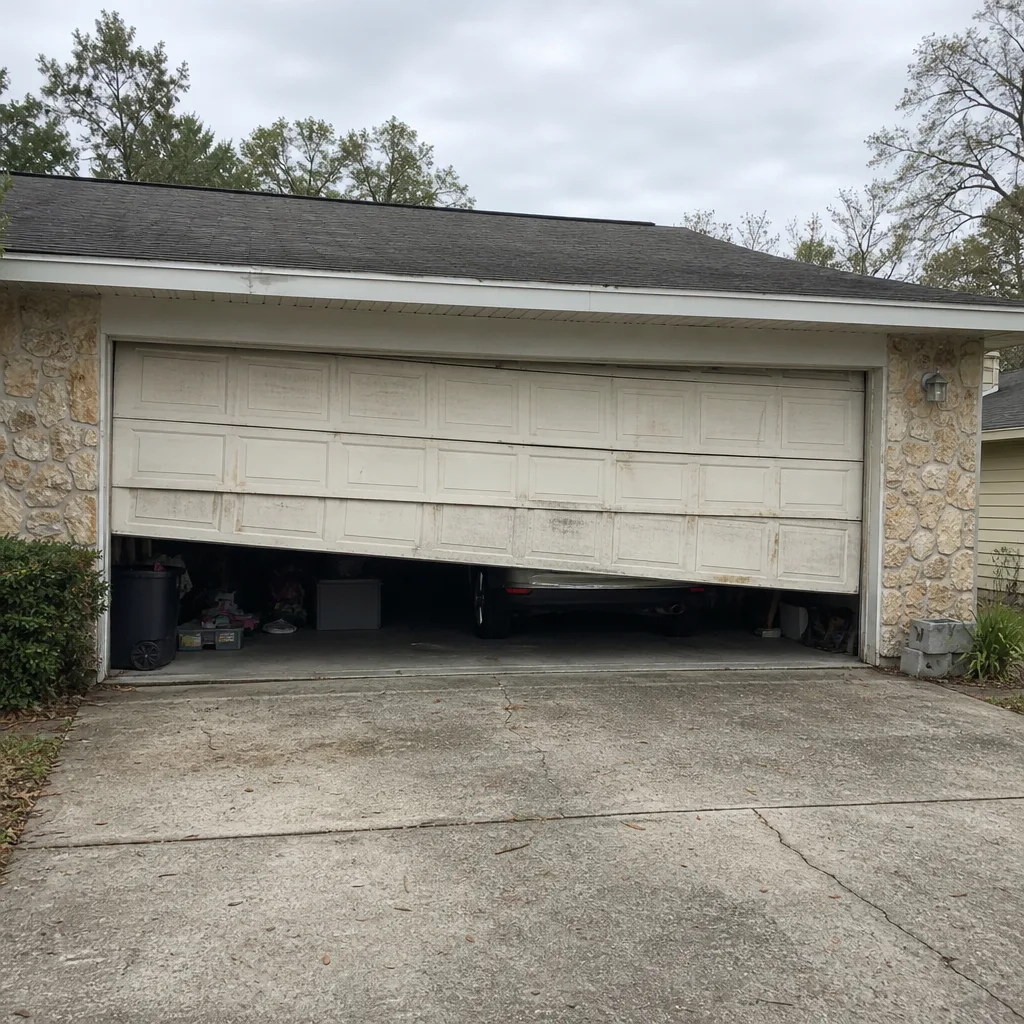 Before
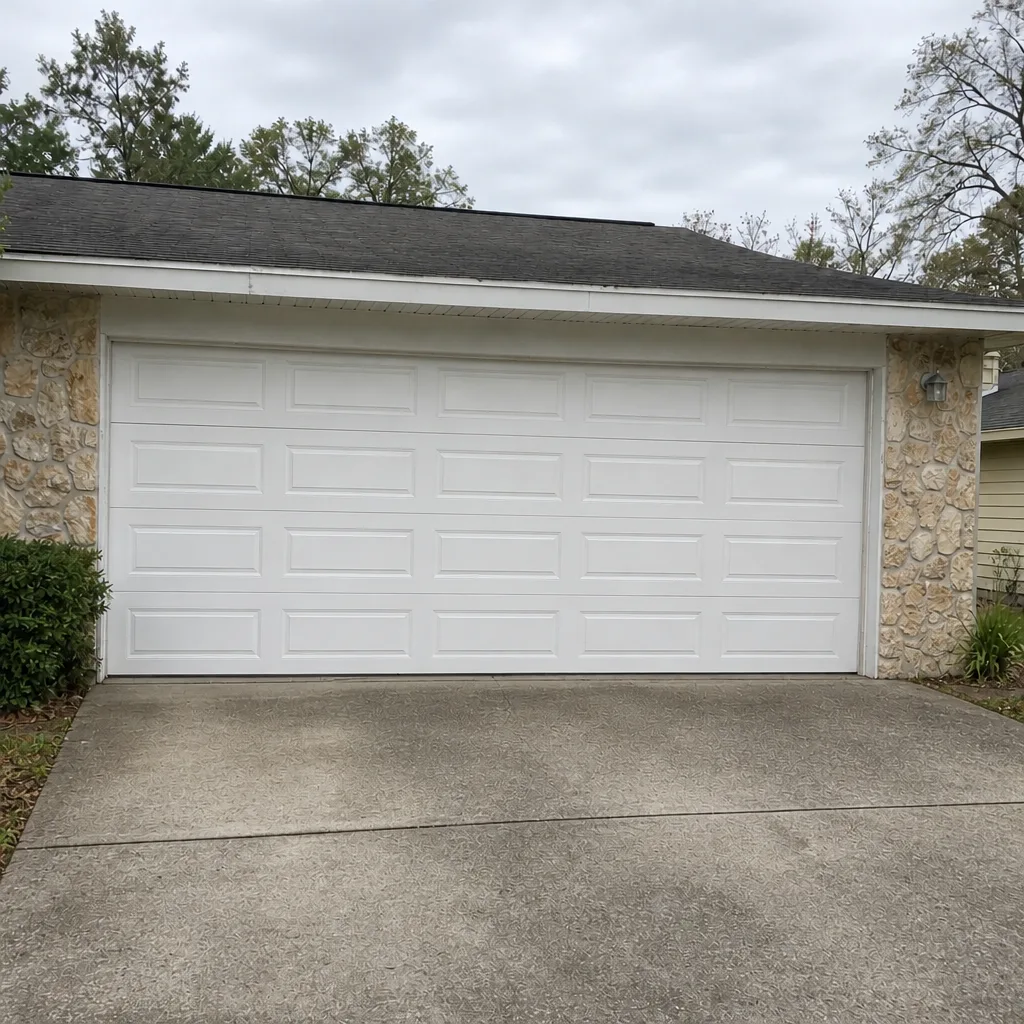 After
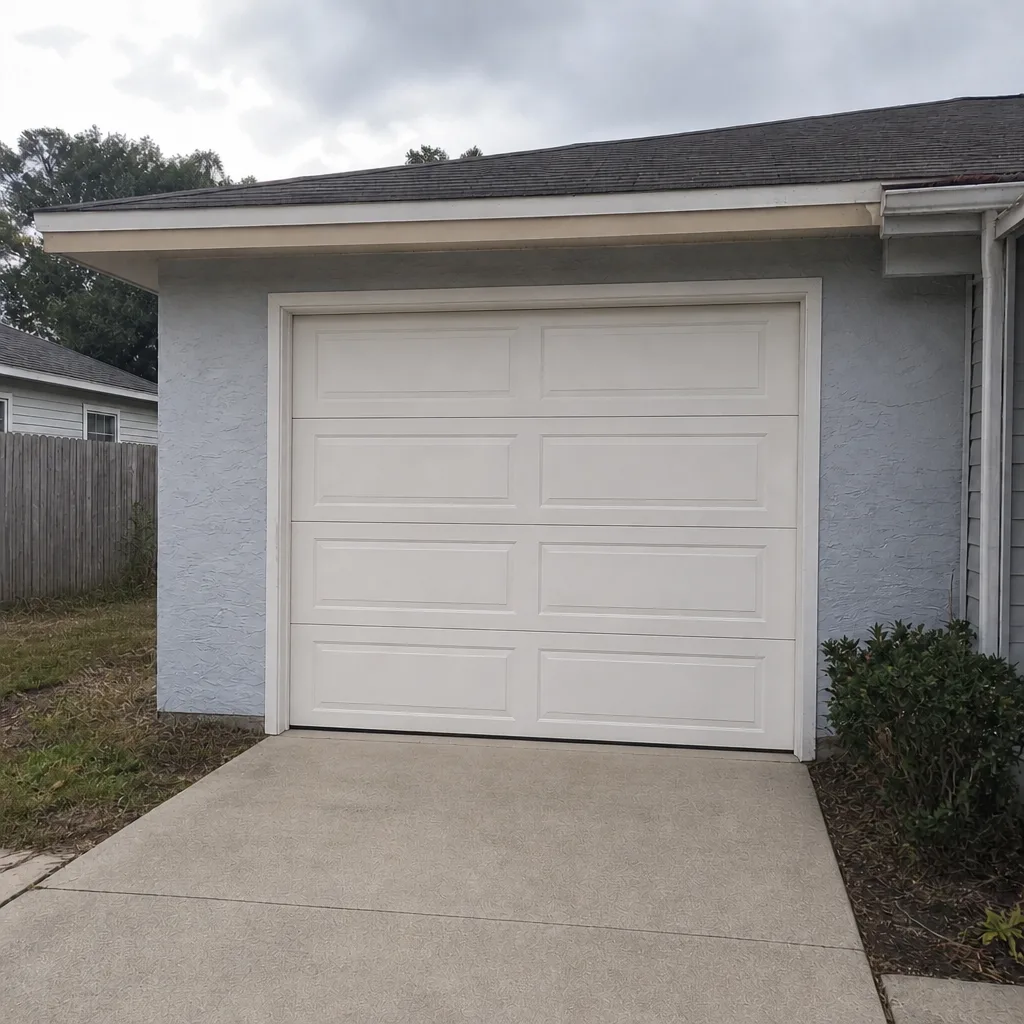
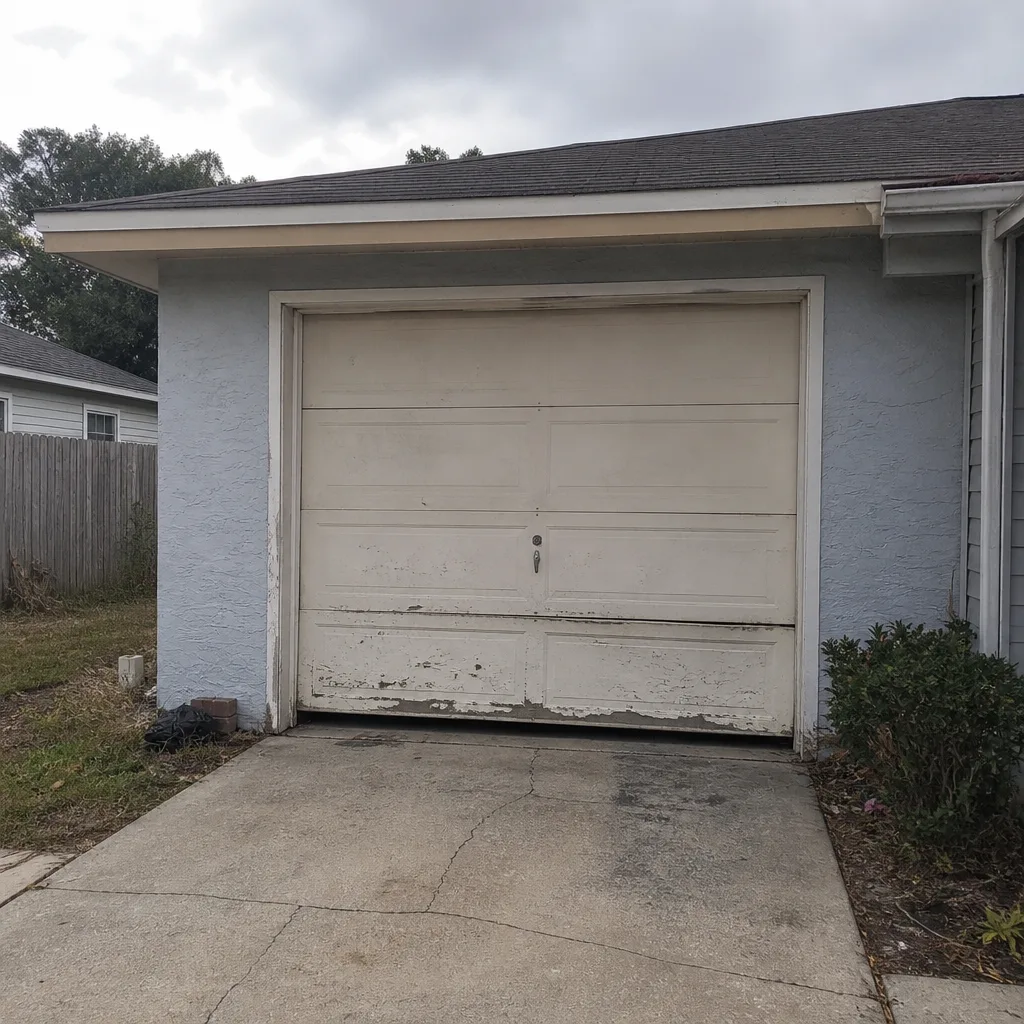 Before
 After
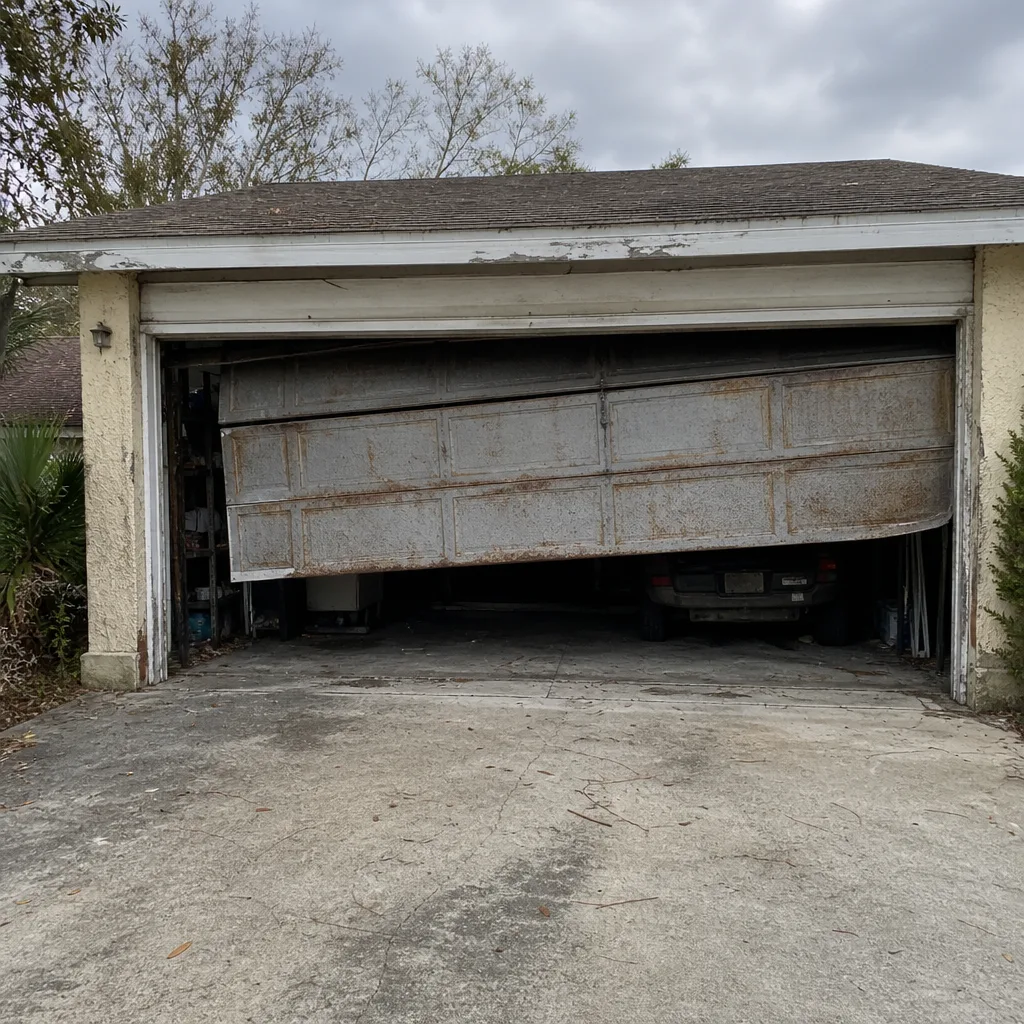 Before
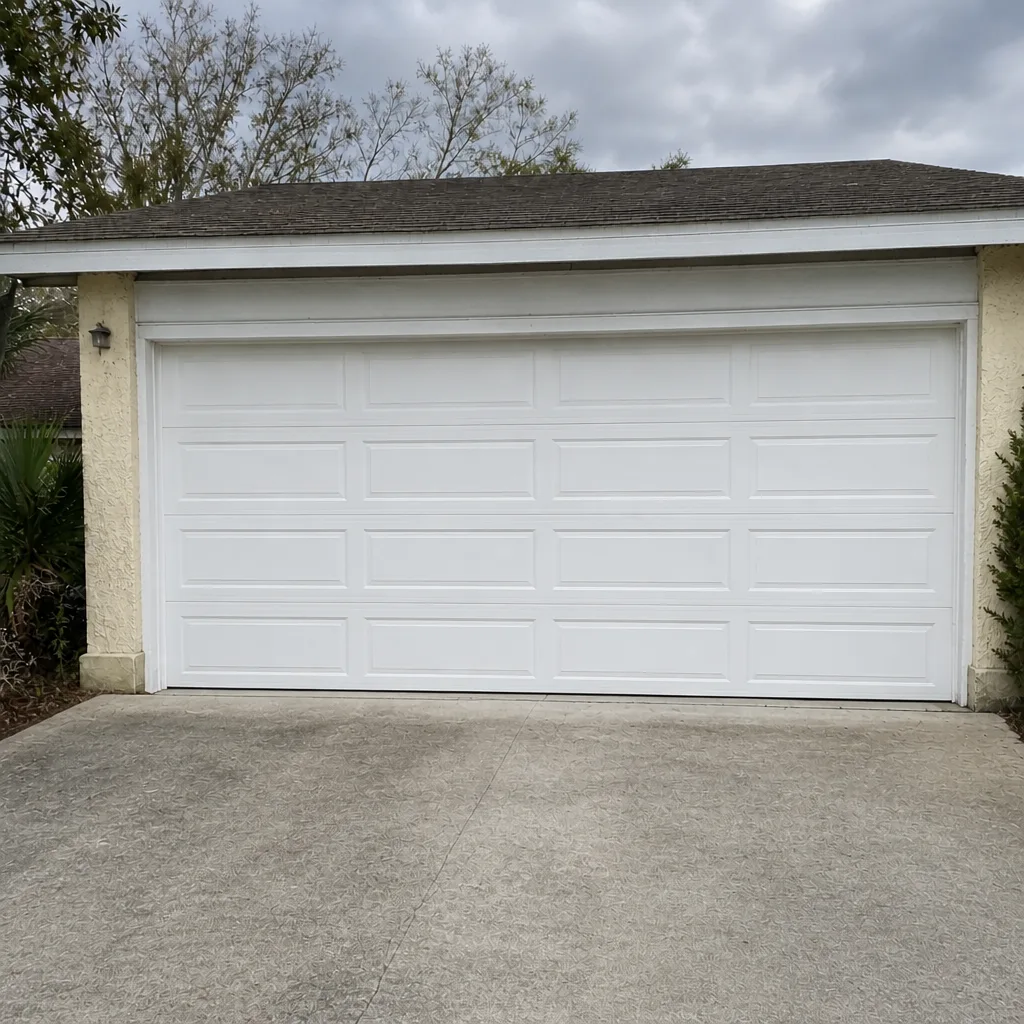 After
Frequently Asked Questions
The most common early signs are a hesitation before the door moves, a grinding or popping sound during travel, a door that lifts unevenly (check the gap at the bottom), rust at the bends of the torsion springs, and an opener that sounds strained or runs slower. Any one of these is worth a look; two or more together usually point to a specific component. Call (833) 508-9952 for an exact quote. Estimates are free.
Look for rust concentrated at the coil ends and bends rather than even surface discoloration, and listen for popping during travel. Mandarin’s warm, humid summers speed up surface corrosion, so springs should get a visual check twice a year. A spring that’s pitted is closer to failure than its size suggests, and if it’s broken, don’t operate the door. Call (833) 508-9952 to have it checked safely.
It depends on the sound and the source. A grinding roller or hinge is usually lower-risk; grinding paired with uneven travel or popping near the spring is not, and that door should stay closed until a technician sees it. Never reach into the spring or cable area yourself. When in doubt, call (833) 508-9952 and describe the sound; we can tell you whether to use the door or leave it.
Often, yes, at least enough to know whether it’s urgent. The brand and model of your opener, the sound you’re hearing, and whether the door lifts evenly all narrow the likely cause quickly. Having those details ready gets you the right parts sooner. We also stock parts directly, which cuts the wait when a specific component is needed. Call (833) 508-9952 with your brand and model.
Torsion spring repair is priced per spring, and since springs usually wear in pairs, a matched pair is priced roughly twice a single spring. We give a written estimate before any work starts, so the quote is the price. Free estimates are available. Call (833) 508-9952 for an exact quote.
No. We inspect the door, explain what we find, and quote before any work begins. If the inspection reveals a bigger issue than the phone description suggested, we tell you before we touch anything, and you decide. Call (833) 508-9952 to book an estimate.
The local professionals we connect you with are licensed and insured as Florida requires. Every technician works on garage doors as their specialty, not as one trade among many. Call (833) 508-9952 for details on the professional assigned to your job.
The Bottom Line
The warning signs that matter most are the early ones: the hesitation, the new grinding noise, the inch of uneven lift, the rust at the spring bends, the straining opener, the cracked panel corner. Each maps to a specific component, and each is far cheaper to address before it fails than after. The pattern to remember is simple: new sound, new gap, new rust, then act. A garage door gives you a repair window, and the whole point of this guide is to help Mandarin homeowners recognize it in time. If something on this list matches what you’re seeing, get it looked at. Call (833) 508-9952 for a free estimate. We answer 24/7. Fast dispatch from 7am to 7pm, Sunday through Friday.
Written by the team at Mandarin Garage Door Repair.