
Last updated November 21, 2026
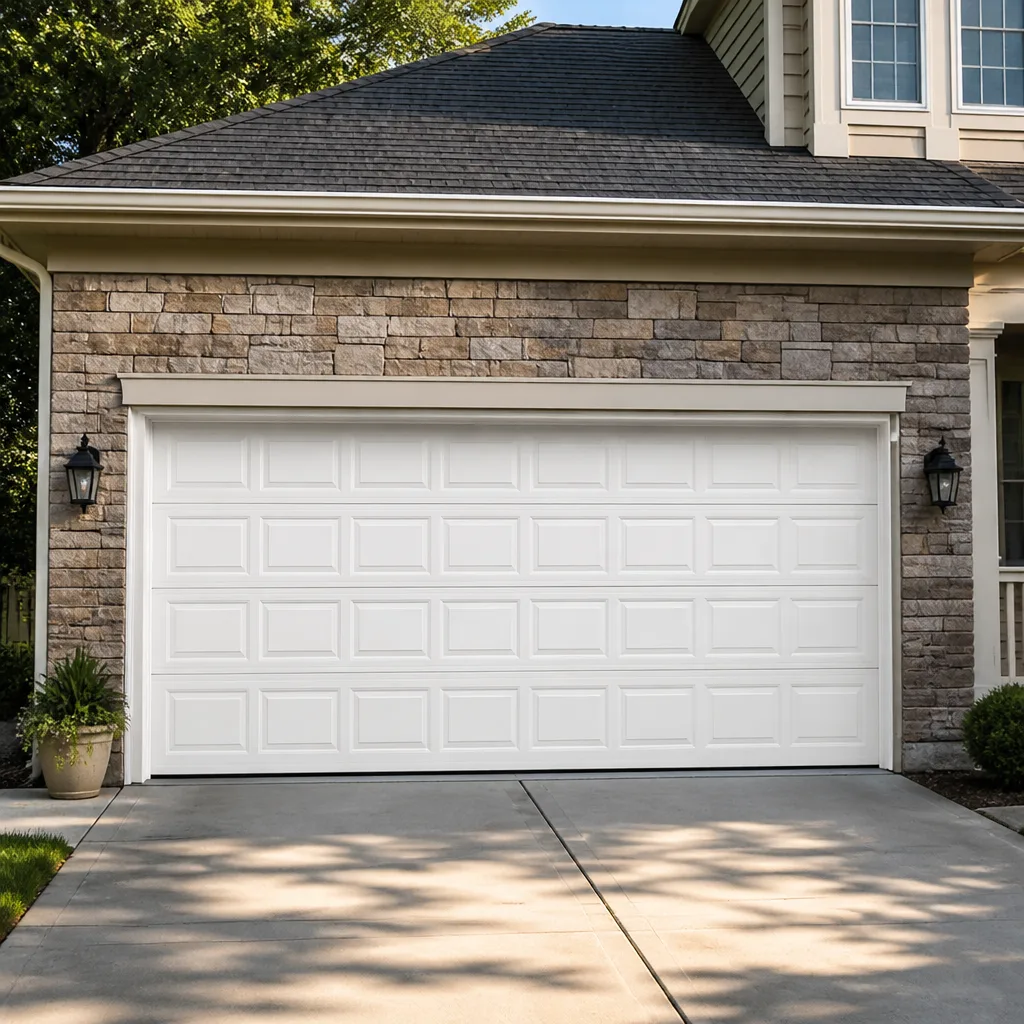 Raised-panel steel
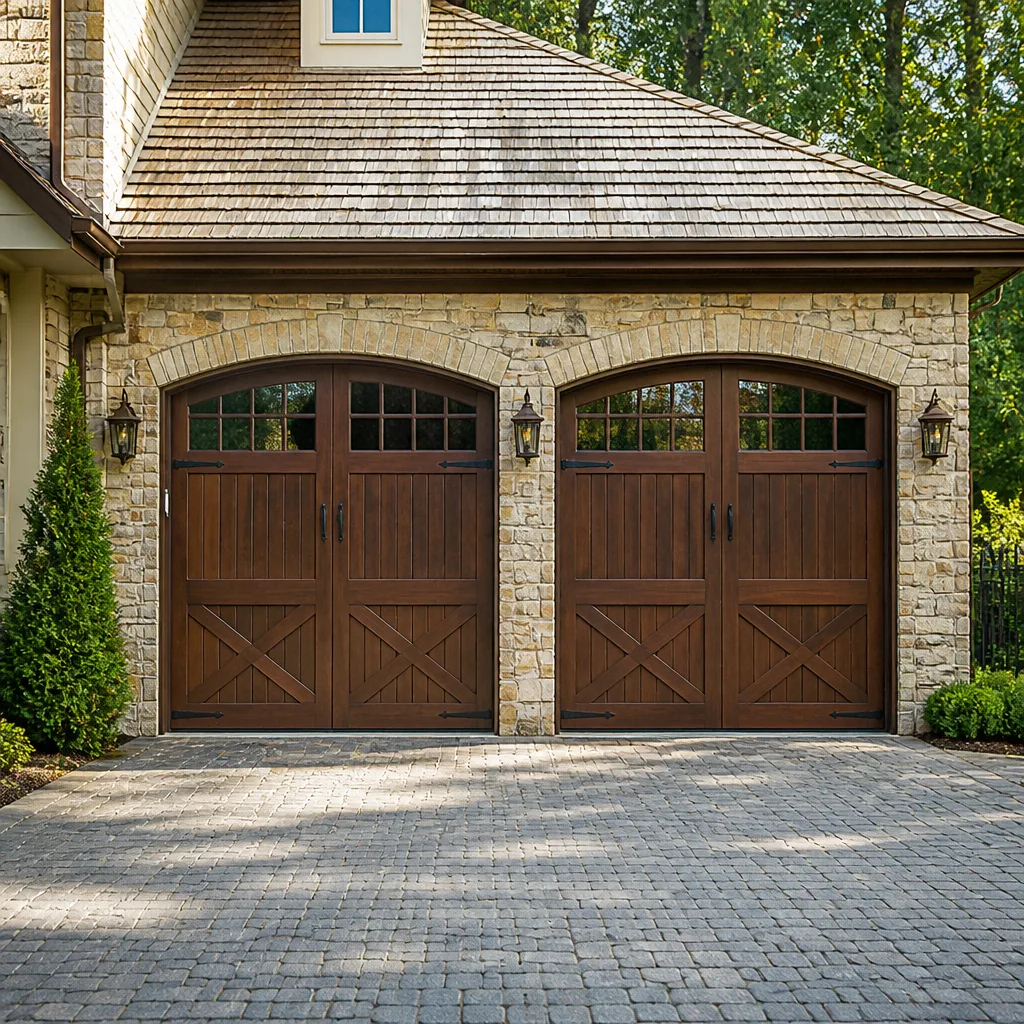 Carriage house
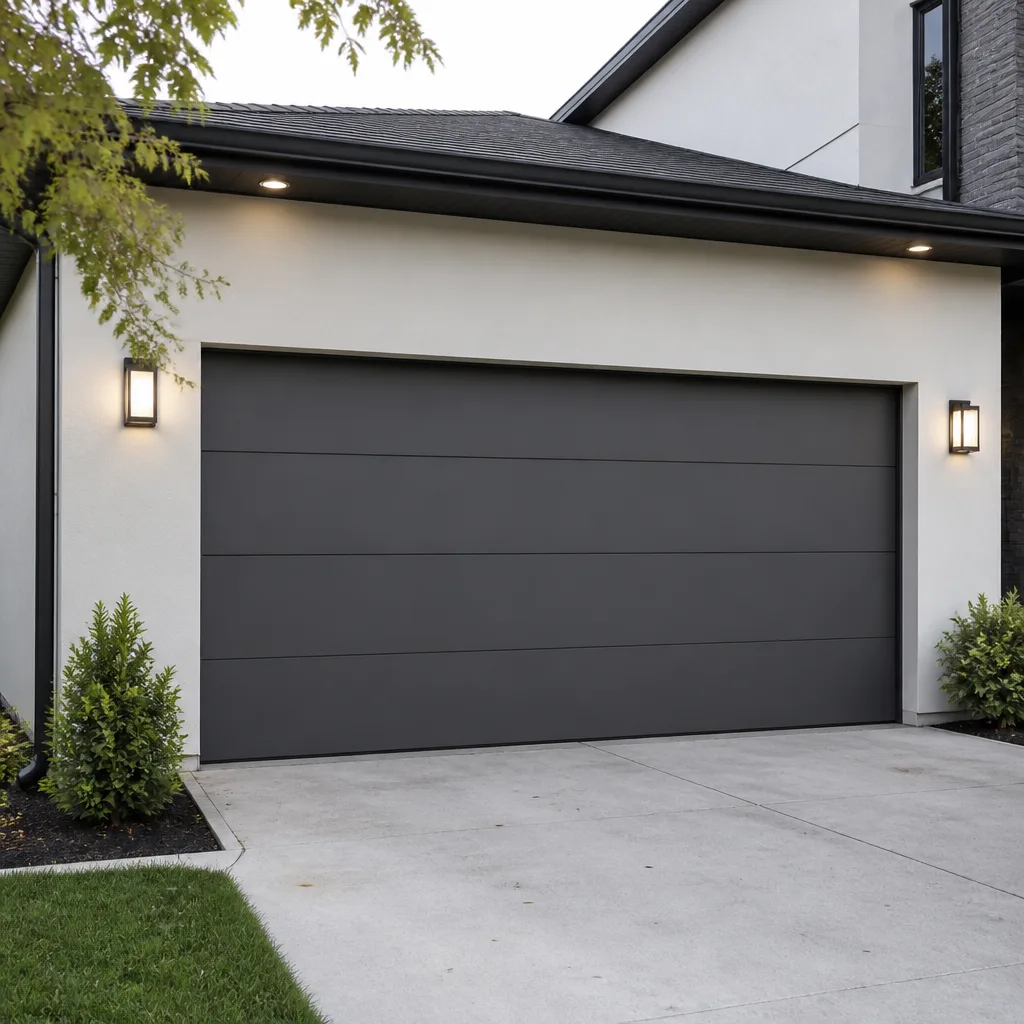 Modern flush
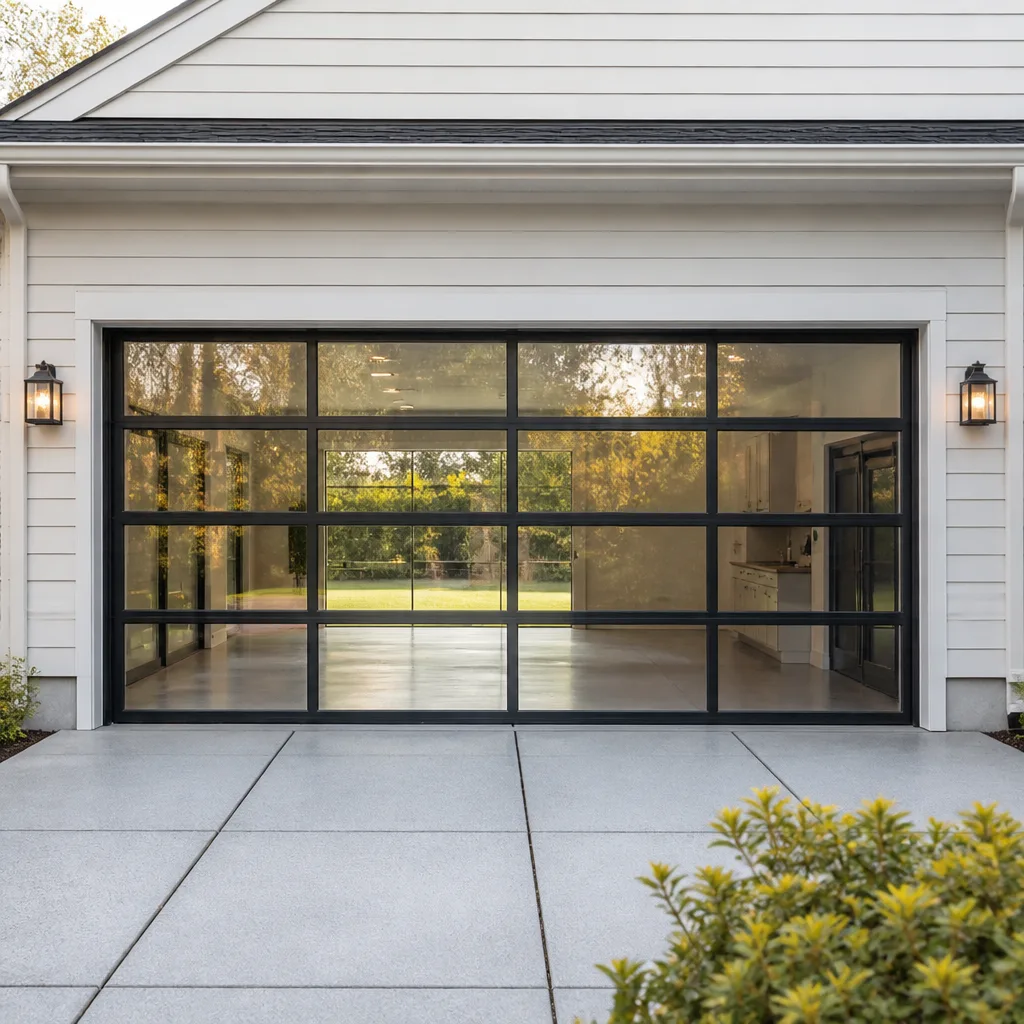 Full-view glass
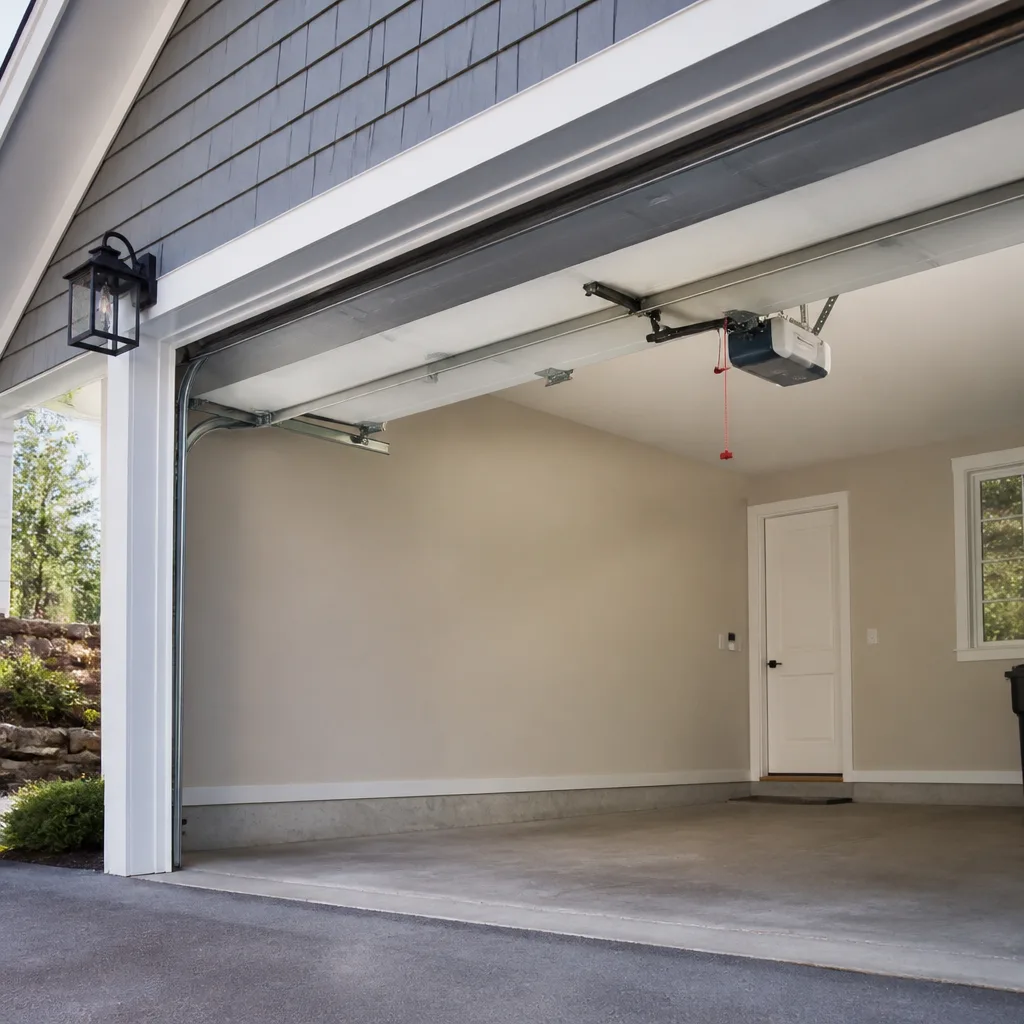 LiftMaster openers
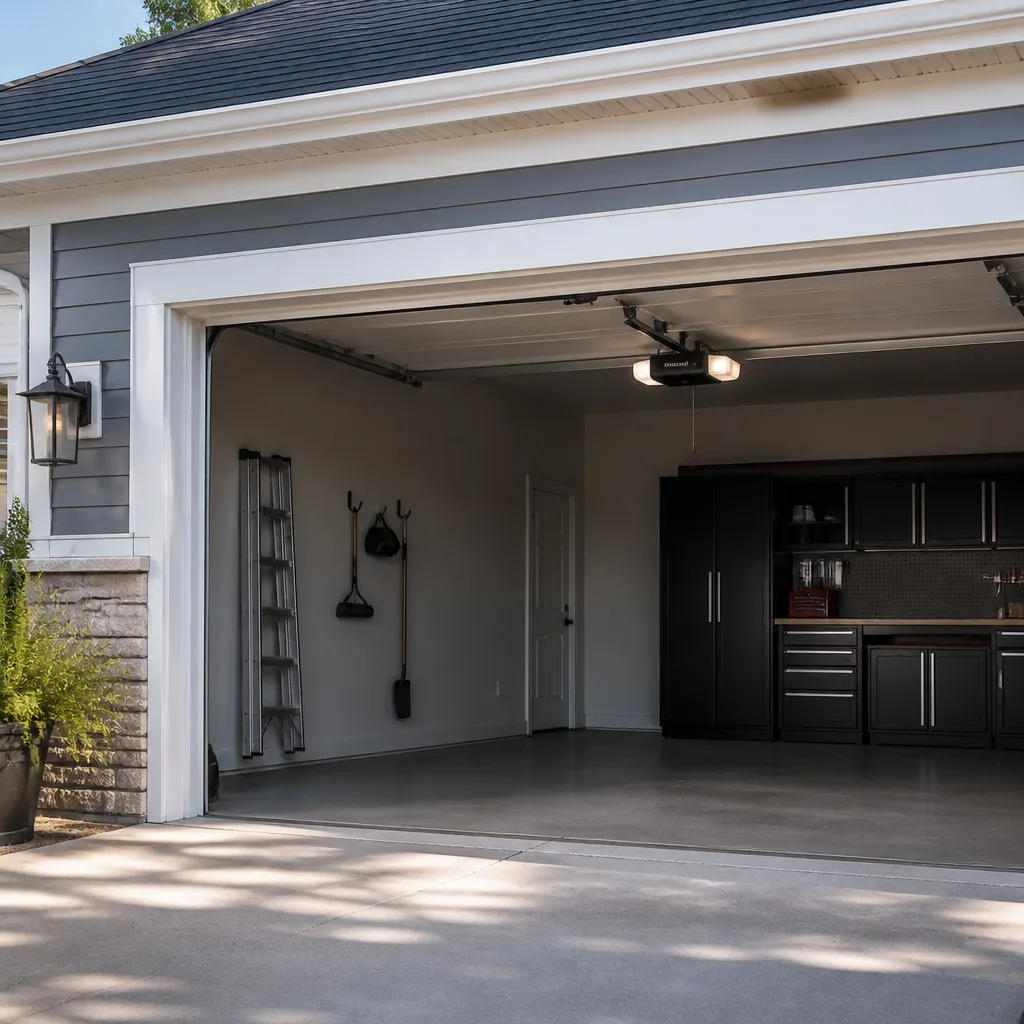 Chamberlain openers
Full 25-point door and opener safety check with every visit - springs, cables, rollers, tracks, and your LiftMaster or Chamberlain opener included
You get a price before we start. It does not change when the pro arrives.
Get your free estimateChoosing the Right Garage Door Brand: A Buyer’s Guide for Mandarin
Most homeowners in Mandarin start the search for a new garage door by typing brand names into Google. Then they get five “best of” lists that all praise the same manufacturers in slightly different order, written by people who’ve never taken a spring out of a torsion tube in their life. Installers, on the other hand, sometimes push a brand hard because it happens to be sitting in their supplier’s yard that week. Both directions are wrong for you.
The brand decision matters less than most homeowners think and more than most installers admit. What actually decides whether a door serves you well for the next decade is door weight, opener compatibility, and whether replacement panels are still being manufactured for that line when you need one in five years. Those three questions are what this guide is about. We work on garage doors in Mandarin every day, and we’ve seen brands age very differently under real Florida conditions. Here’s what that experience tells us.
Quick Answer
For most Mandarin homes, the right garage door brand is the one whose panels are currently in production, whose weight pairs correctly with your existing opener, and whose local distributor carries replacement parts for that line. Clopay and Amarr are solid choices for most residential installs here, with Wayne Dalton worth considering for its proprietary Thermacore construction. The brand name matters far less than the supply chain behind it, and less than getting the door weight and opener matched correctly.
Styles & brands we work with
- Raised-panel steel
- Carriage house
- Modern flush
- Full-view glass
- LiftMaster openers
- Chamberlain openers
Table of Contents
- Why the Brand on Your Door Matters Less Than You Think
- What Florida Does to a Garage Door (and Why Those Specs Matter)
- Side-by-Side: Clopay, Amarr, Wayne Dalton, and the Florida Specs That Matter
- Insulation and R-Value: Florida Uses the Number Differently
- Parts Availability: The Question Every Brand Guide Skips
- Opener Brand Compatibility and Smart Home Integration
- Long-Term Cost of Ownership: Warranty, Panel Discontinuation, Proprietary Hardware
- A Numbered Process for Choosing Your Door in Mandarin
Why the Brand on Your Door Matters Less Than You Think
The name printed on the door is one variable. The panel profile, the gauge of the steel, and whether the manufacturer still cuts replacement sections for that profile in five years matter more. A door is not a refrigerator. You buy it once and keep it for a long time, and the only thing that really matters over that time is whether you can get parts when something wears out.
Here’s a thing most homeowners don’t know: door panels are made in production runs. A manufacturer will run a given profile and color for a set period, then discontinue it and reorganize production for the next line. When your neighbor’s door needs a single damaged section replaced, the first question isn’t “who made it” but “is that profile still being cut.” We’ve seen plenty of doors where the door itself is fine and the panel profile is the problem.
Run through the actual decision variables before you spend time comparing brands:
- Panel production status. Is the profile you’re considering currently manufactured, or is it a closeout?
- Door weight. Does your existing opener and track system handle it without struggling?
- Gauge of steel. A thinner 27-gauge panel will dent sooner than a 24-gauge or 25-gauge panel, especially if you have a driveway where cars turn close to the door.
- Local parts supply. Does a distributor within driving distance of Mandarin stock replacement sections and hardware for that line?
- Proprietary hardware. Does the brand use a standard torsion tube and drum setup, or a proprietary springing system that forces you back through their supply chain?
Note what isn’t on that list: brand name, color, and manufacturer marketing copy. Door brand is one input among five, and it’s not the most important one. What that means practically is that “best garage door brand in Mandarin” is a moving target, and any guide that locks in a straight ranking is guessing at best.
What Florida Does to a Garage Door (and Why Those Specs Matter)
The specs that matter on a garage door are the ones your climate sits on hardest. In Mandarin and the rest of northeast Florida, that’s sunlight, humidity, and heat. Winters here are mild, so the cold-weather failure modes people in northern states worry about barely apply. What actually happens to a Florida garage door is UV degradation, humidity-driven paint failure, and heat-driven thermal expansion whose effect gets chalked up to the door failing on its own.
Start with the sun. A south- or west-facing garage door takes direct UV exposure all day, and that breaks down paint, plastic trim, and the foam insulation behind the skin. In Mandarin, a door that faces west effectively has to survive fifteen-plus years of summers. Insulated panels with a chemical UV inhibitor written into the paint spec age better than bare steel you have to keep repainting. If the spec sheet says nothing about UV stabilization of the topcoat, that’s a red flag on a door with a west or south exposure.
Then there’s humidity. North Florida’s summer humidity works on two fronts. It’s hard on wood and wood-composite frames and trim around the opening, and it finds every weak spot in the paint on a steel door. A single thin scratch on a steel panel becomes rust, then bubbling paint, then rust running down the door. Doors with a heavier factory finish and a warranty explicitly covering perforation from the inside out will survive longer here than doors that tell you to repaint every few years.
Finally, thermal expansion. Daytime highs in the upper 90s and nighttime lows in the mid-70s during summer cause the door panels to expand and contract. That expansion finds every loose screw, every bushing that’s seen better days, and every track mount driven into a stud that’s moved. A door with more panel sections has more joints to work loose under that cycling, but also handles the expansion better per section. The right number of sections depends more on your opening width than on brand.
What this means for brand selection: lean toward brands with an explicit UV-stabilized topcoat and a heavier gauge of steel. Don’t treat the cold-climate specs as serious decision factors in Mandarin, because they aren’t. That’s a brand filter, not just a construction filter.
Side-by-Side: Clopay, Amarr, Wayne Dalton, and the Florida Specs That Matter
Here’s a working comparison of the brands that come up most in Mandarin. We’re not ranking these, because the right brand depends on the door you’re replacing, the opening you have, and what’s still in production. Consider this a snapshot of how each line handles the Florida specs that actually matter.
Clopay. Clopay offers a wide span from entry-level steel to fully insulated and carriage-house styled lines. The gauge on their mid-range models runs heavier than the bottom of the market, which matters under Florida sun. The Avante collection uses aluminum and glass panels that handle direct sun more predictably than steel-painted panels do, though aluminum prices reflect the material. Insulation on their higher-end lines runs comfortably into R-6 to R-9 territory with a polystyrene or polyurethane core, which is enough for our climate. Clopay’s biggest advantage in Mandarin is parts depth. Their residential profiles are broadly supported in the Jacksonville metro distributor network, so getting a replacement section is usually a matter of days, not months.
Amarr. Amarr’s strength here is that their product line splits cleanly between thin-gauge entry steel and heavier insulated doors, so you know what you’re paying for. Their Classica and Heritage lines both work for most Mandarin homes and handle UV exposure well when the factory paint is intact. Amarr’s insulation is on the polystyrene side, which has a slightly lower R-value per inch than polyurethane, but is a reasonable fit for a mild-winter climate. Amarr doors use fairly standard torsion and hardware setups, which means if something fails on your Amarr door five years from now, we can source hardware without chasing down proprietary parts.
Wayne Dalton. Wayne Dalton is the odd one out in any list, and it deserves a longer note. Their Thermacore line uses their own proprietary foam-filled construction that’s genuinely good for insulation and worth considering if your garage shares a wall with a conditioned room. But some Wayne Dalton openers and door hardware are proprietary, and the parts chain is narrower than Clopay or Amarr. What that means in practice is that on a Wayne Dalton door, you should ask up front whether the specific profile is still in production, and whether the replacement spring setup uses standard torsion hardware. On certain Wayne Dalton models it doesn’t, and that becomes a cost of ownership issue years out.
CHI. CHI is worth knowing about if you’re after heavier-gauge steel or a specific look, but the local distributor network for CHI in the Jacksonville area is narrower than Clopay or Amarr, which matters when you need a single replacement section two years from now. Not a dealbreaker. Just a factor.
What the four share: all of them make a door that will last if the panel profile is right, the gauge is right, and the door weight is matched to your opener. What they differ on is production depth and parts support. That’s the honest breakdown. Anyone telling you differently is selling one brand that week.
Insulation and R-Value: Florida Uses the Number Differently
R-value is thermal resistance, and up north it’s the number that keeps your garage from being a fridge. In Mandarin, the question is inverted. Our air conditioning runs longer than our heating, and the realistic concern is the door as a heat load, not as a cold leak. That changes which R-value actually earns its price here.
Here’s a practical way to think about it. For a Mandarin home with an attached garage, R-values in the R-6 to R-9 range on the door are enough for most situations, because the door isn’t the biggest heat exchange point in that wall assembly. Going from a non-insulated door to an R-6 insulated door is a meaningful step: it cuts the radiant heat off the inside of the door and reduces how much heat leaks from the garage into the house through the shared wall. Going from R-9 to R-16 is a much smaller step on a Florida home, and rarely pays back in comfort. Polyurethane-core doors hit higher R-values than polystyrene-core doors at the same thickness, and the difference in price is usually bigger than the difference in comfort.
The other half of the R-value conversation is durability of the insulation itself. Some inexpensive insulated doors use foam blocks glued to the inside of a panel that separates from the steel over a few summers of expansion and contraction. Panels with the foam bonded to both the inner and outer skin don’t come apart that way. When someone quotes you an insulated door, ask whether the insulation is bonded to both skins or floated. This is a Florida spec, not a cold-climate spec, and most brand guides skip it.
If your garage is detached and unconnected to the house, insulation is optional and mostly affects noise and how hot the garage is when you go out there. In that case, spend the price difference on heavier gauge steel and a better opener instead. We advise Mandarin homeowners to match the door spec to how they actually use that garage, not to the marketing tier of the door.
Parts Availability: The Question Every Brand Guide Skips
The parts availability reality in Mandarin comes down to one number: how many weeks it takes to get a single replacement section after a car clips your door or a ladder slips against it. On the major brands with deep local distributor support, it’s usually days. On narrower brands, it can be weeks or worse, and a door that’s otherwise perfectly functional becomes an eyesore on the front of your house in the meantime.
Here’s what we notice about the parts supply chain in this area, ranked from deepest to narrowest:
- Clopay and Amarr. Broadest parts coverage through Jacksonville-area distributors, with the most predictable replacement section lead times for their most common residential profiles.
- LiftMaster and Chamberlain. Both are parts of the same manufacturing family for openers, and their opener parts are the easiest of anything to source here. If you’re matching a door to an opener brand, that pulls toward these two.
- Genie. Reasonable parts availability, and a good option if you want a lower opener price point.
- Craftsman. Older Craftsman doors and openers are widely present in Mandarin homes, and many parts and opener components can still be sourced. Parts for older lines get harder as production runs end.
- Raynor. Solid doors, but the parts network is narrower than the majors, and a replacement section may take longer to source.
- Wayne Dalton. Their Thermacore doors are fine, but the proprietary hardware side of the line narrows the parts network and can force a longer wait.
The reason we stock parts directly rather than handing you a phone number for a supplier is exactly this. When a spring or a hinge or a section fails, the delay is usually in sourcing, not in labor. Having the parts on hand shortens the wait and lets us finish the job the same visit rather than scheduling a return call.
Ask the installer one question before you sign anything: “If I need one panel in three years, how many weeks will it take?” That one question is worth more than any brand comparison you’ll read online. If the answer is vague, that’s the answer.
Opener Brand Compatibility and Smart Home Integration
Opener brand compatibility is the part most door buyers get wrong, and it costs them real money. When you choose a door, the door weight has to match what the opener was engineered to lift. A heavier insulated door on an opener sized for a lighter uninsulated door is the single most common premature-openers-failure pattern we see in Mandarin. The opener can lift the heavier door on the first try, then it works harder than it should every time after that, and the failure arrives earlier than the warranty sheet suggests.
Here’s how to think about the opener side before you choose a door:
- Match door weight to opener class. A typical single-car door weighs less than a two-car insulated door. If you’re moving from uninsulated to insulated, assume you’re going up an opener class. That’s true regardless of brand.
- LiftMaster and Chamberlain. These two share manufacturing family ties and are broadly compatible with MyQ smart-home integration. If you want an opener that connects cleanly to a phone app, that’s the simplest route. Many LiftMaster and Chamberlain openers also work with standard safety-bumper and photo-eye accessories that are easy to source here.
- Genie. Reliable and a common match for lighter residential doors. Smart-home integration exists but is less standardized than MyQ.
- Craftsman. Older Craftsman openers are common in Mandarin. When they fail, they can be replaced with a Genie, LiftMaster, or Chamberlain. Don’t let brand loyalty to Craftman lock you into waiting on a hard-to-source part.
- Wall control wiring. If your opener uses the standard two-wire wall control, swapping brands later is easy. If it uses a serial or proprietary wiring setup, plan to keep the same brand unless you want to fish new wire through the wall.
For smart-home integration, decide early whether that matters to you. If it does, pick the opener brand first and match the door to it. If it doesn’t, pick the door first and match an opener to the door’s weight and dimensions.
The other compatibility point that gets skipped: opener safety systems. All current openers have a photo-eye or safety-edge system, and those components have to stay compatible with the door track and travel. If you replace the door and keep the opener, make sure the safety hardware still clears the new door’s track and travel. That’s one of the things we check on every install.
If your existing garage door opener repair is what tipped you toward replacing the door, we can help decide which way to go. Replacing an opener is usually cheaper. Replacing a door that’s worn out underneath a functioning opener is a separate decision.
Long-Term Cost of Ownership: Warranty, Panel Discontinuation, Proprietary Hardware
Long-term cost of ownership on a garage door is dominated by three things: how long the manufacturer keeps cutting the profile, how much proprietary hardware the door forces you through, and what the warranty actually covers. The sticker price tells you almost nothing about the ten-year number.
Here’s the framing we use with every garage door installation in Mandarin:
- Panel discontinuation risk. Most manufacturers retire panel profiles every few years. The question is whether your specific profile is likely to survive the next five years. A common profile that many homes in the area use is safer to depend on. A distinctive carriage-house style with a limited color run is riskier.
- Proprietary hardware lock-in. Standard hardware includes a torsion tube, torsion springs, drums, and cables that any garage door tech can source and replace. Proprietary hardware includes springing systems or torsion setups that only the manufacturer sells. Proprietary saves cost and weight at the factory but costs you later. When spring replacement time comes, proprietary hardware means either paying a premium for the manufacturer part or replacing the whole assembly with standard hardware.
- Warranty structure. Garage door warranties typically split into sections. The door panels have their own warranty. The hardware has another, usually shorter. The finish and paint have another, typically a defined number of years. Read all three. A warranty that promises a long panel term but disclaims the paint is not a strong warranty in Florida, because sun is what kills the finish here.
- Insulation warranty. Polyurethane and polystyrene foam cores have their own warranty terms. Foam that separates from the steel skin isn’t usually covered by the panel warranty unless the manufacturer bundles them.
- Total installed price vs. door price. The door price online is not the installed price. Track, springs, opener, labor, disposal of the old door, and any structural prep to the opening all add to the number the installer quotes.
The brands where the long-term math tends to look best in Mandarin are the ones with the deepest local parts network and the fewest proprietary components. Clopay and Amarr generally hit both. Wayne Dalton’s Thermacore line is a good door that has a real proprietary-hardware tradeoff worth factoring into your decision.
One more long-term point that rarely gets written up: every year you defer replacement on a worn door, the surrounding parts (springs, cables, hinges) wear with it, and the eventual replacement quote includes replacing more than the door. Not urgent, but worth knowing when you’re comparing a door quote this year to one next year.
A Numbered Process for Choosing Your Door in Mandarin
Here’s the process we’d walk you through if you called us today about a new door. It’s not brand-led; it’s fit-led.
- Measure the opening. Width, height, and headroom above the opening. A door that’s an inch too tall or too narrow is a bad day for everyone. The opening determines what profiles and gauges are even options.
- Assess the existing opener. Lift capacity, age, and whether it can handle a heavier door. If you’re going from uninsulated to insulated, plan for this step now.
- Decide insulated or not. If the garage is attached to the house and you use the garage regularly, go insulated. If it’s detached and unconnected, the price difference goes further on heavier gauge and a better opener.
- Pick the gauge based on exposure. A door that faces west or south, or a driveway where cars turn close to the door, deserves heavier steel. A door facing east under a deep overhang can survive a lighter gauge.
- Check panel production status. Ask the installer whether the specific profile and color you’re considering is in active production. If it’s a closeout run, weigh that against long-term parts risk.
- Confirm opener compatibility. LiftMaster or Chamberlain for smart-home preference. Genie for a lighter door with less smart-home demand. Skip any proprietary opener wiring if you might swap brands later.
- Get the written quote. Full installation, springing, tracks, opener, disposal, and any structural prep. Quotes that leave out opener and disposal are not the number you’ll pay.
Most homeowners go through this in a conversation, not a spreadsheet. Bring your existing door’s brand and model if you know it, and a photo of the opening if it’s helpful. From there we can tell you which brands actually support that opening and opener, rather than which brand the supplier is pushing that week.
If the door itself is fine and the problem is a broken spring, that’s a garage door repair conversation, not a new-door conversation. High-tension spring repair is the one service where specialist experience matters most. We do this work, and we handle it safely.
Common Mistakes to Avoid
- Choosing by brand alone. Two Clopay doors with different gauges and profiles can age very differently in Mandarin’s sun. Brand is not the spec that matters most.
- Replacing the door without checking the opener. A heavier door on an opener sized for a lighter one will shorten the opener’s working life. Match them at the design stage, not after.
- Skipping the panel production check. If the profile is being discontinued, your replacement section in three years will be a longer wait and a higher price than a door on a common profile.
- Buying a proprietary-hardware door to save a little. Proprietary spring setups look fine at installation and create a longer-term cost at the first spring repair. Standard torsion hardware is easier to source and service.
- Ignoring Western exposure. A west-facing door in Mandarin needs an insulated panel with a UV-stabilized topcoat. A door that would be perfectly fine on the east side of a house will fade and chalk early when it faces west.
- Treating insulation as a heating-season upgrade. Here, it’s about heat gain from the garage into the house, and it reduces the AC load. Upgrade for that reason, not for a cold-season saving that doesn’t apply.
- Comparing only the door price. Installed price includes tracks, springs, opener, disposal of the old door, and possibly structural prep around the opening. A door-only number is not the number you’ll pay.
See the difference
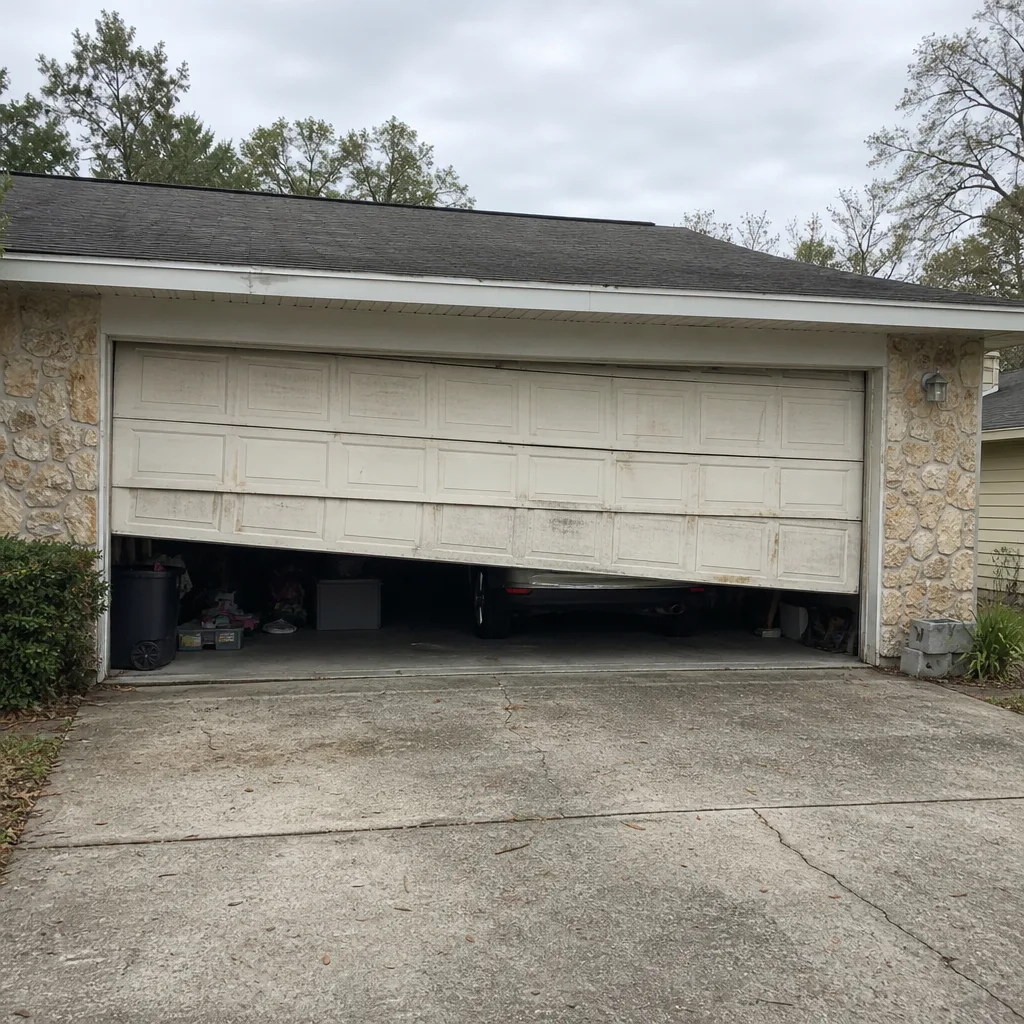 Before
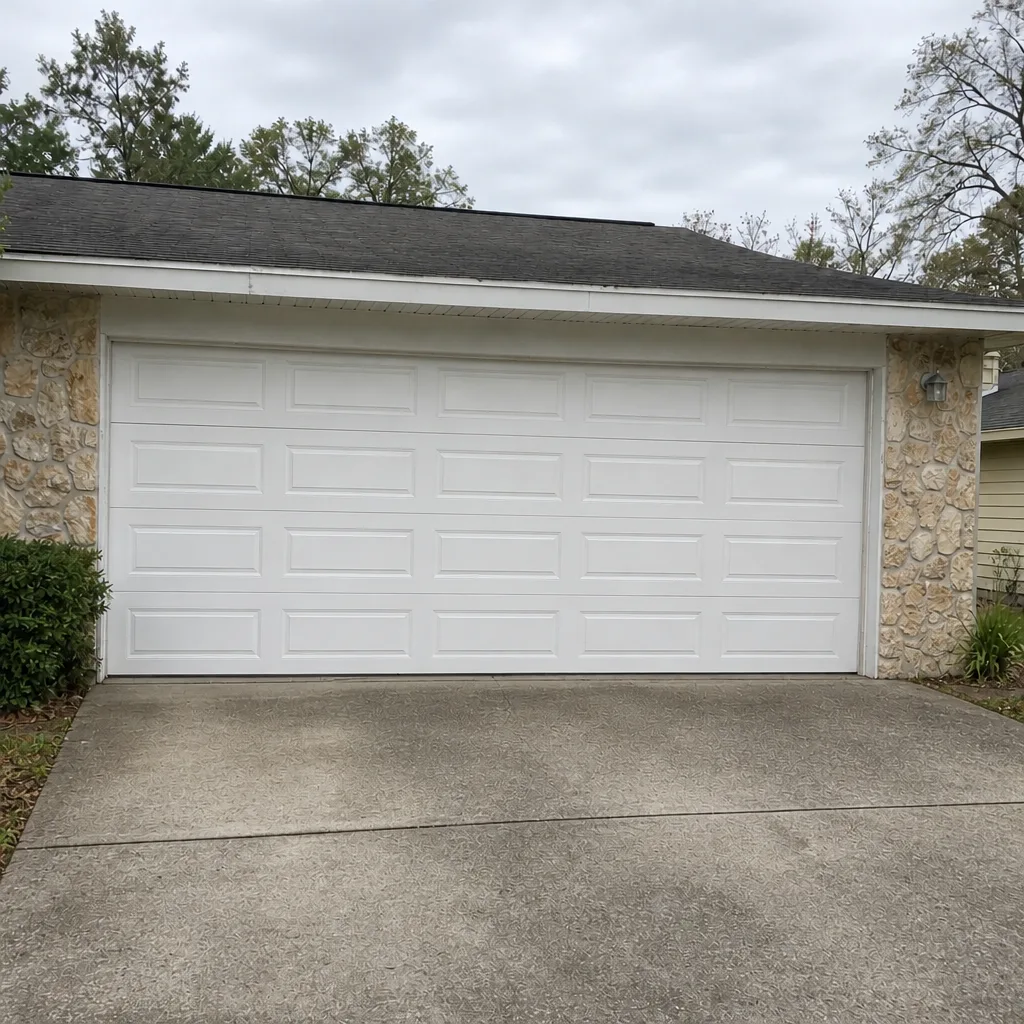 After
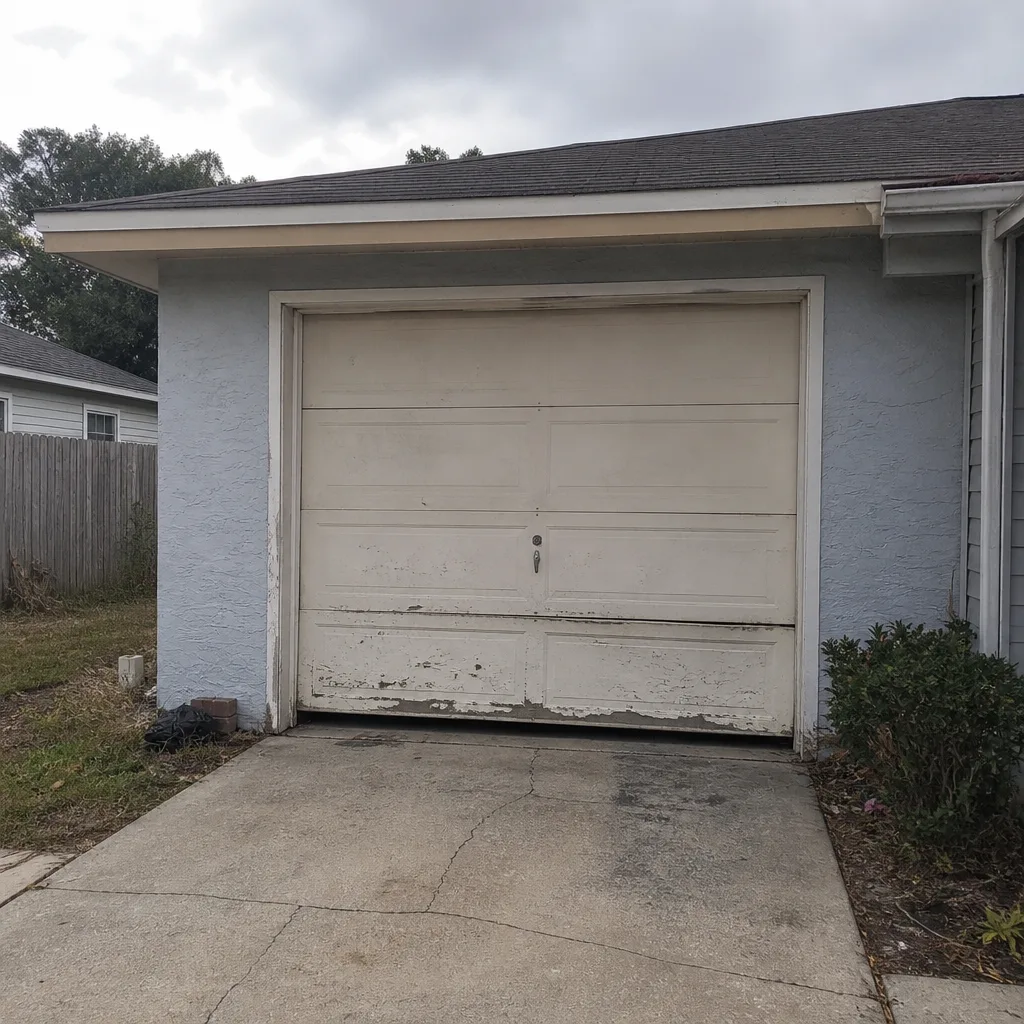 Before
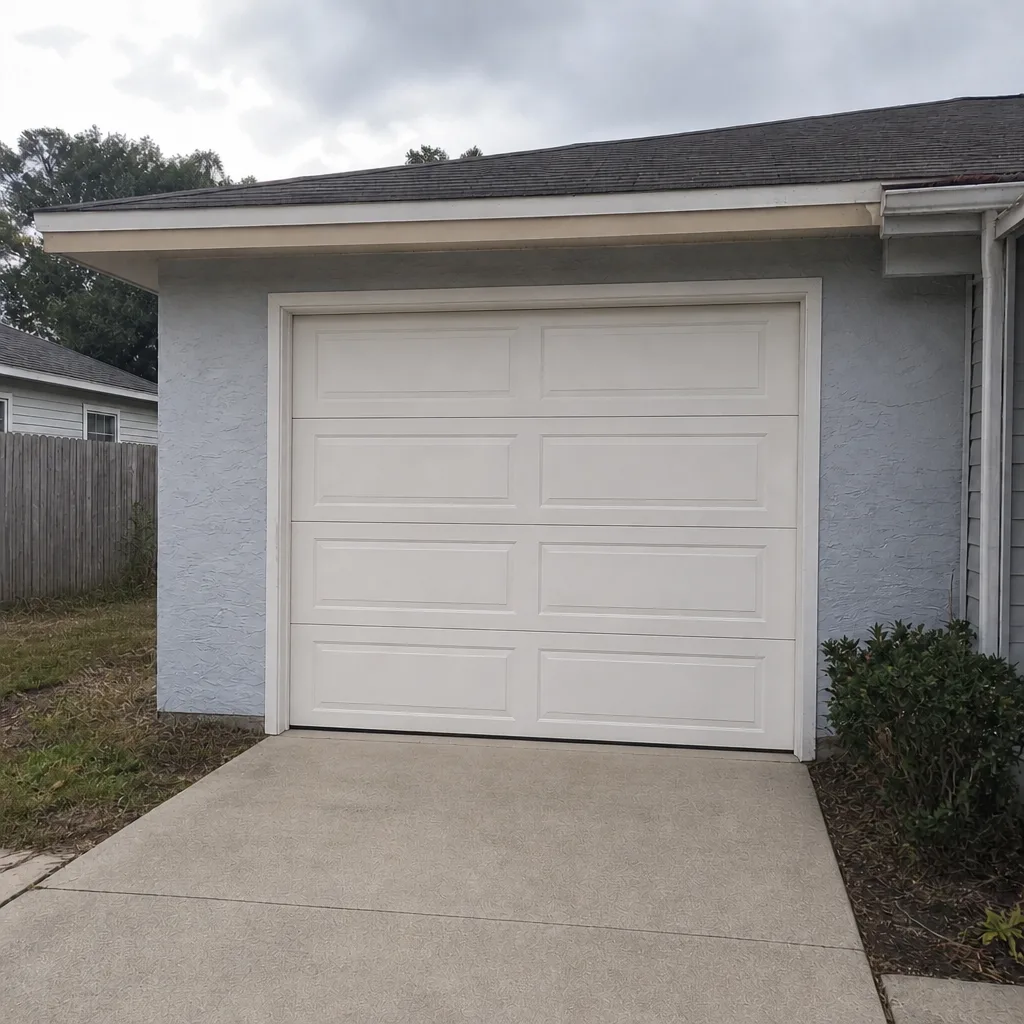 After
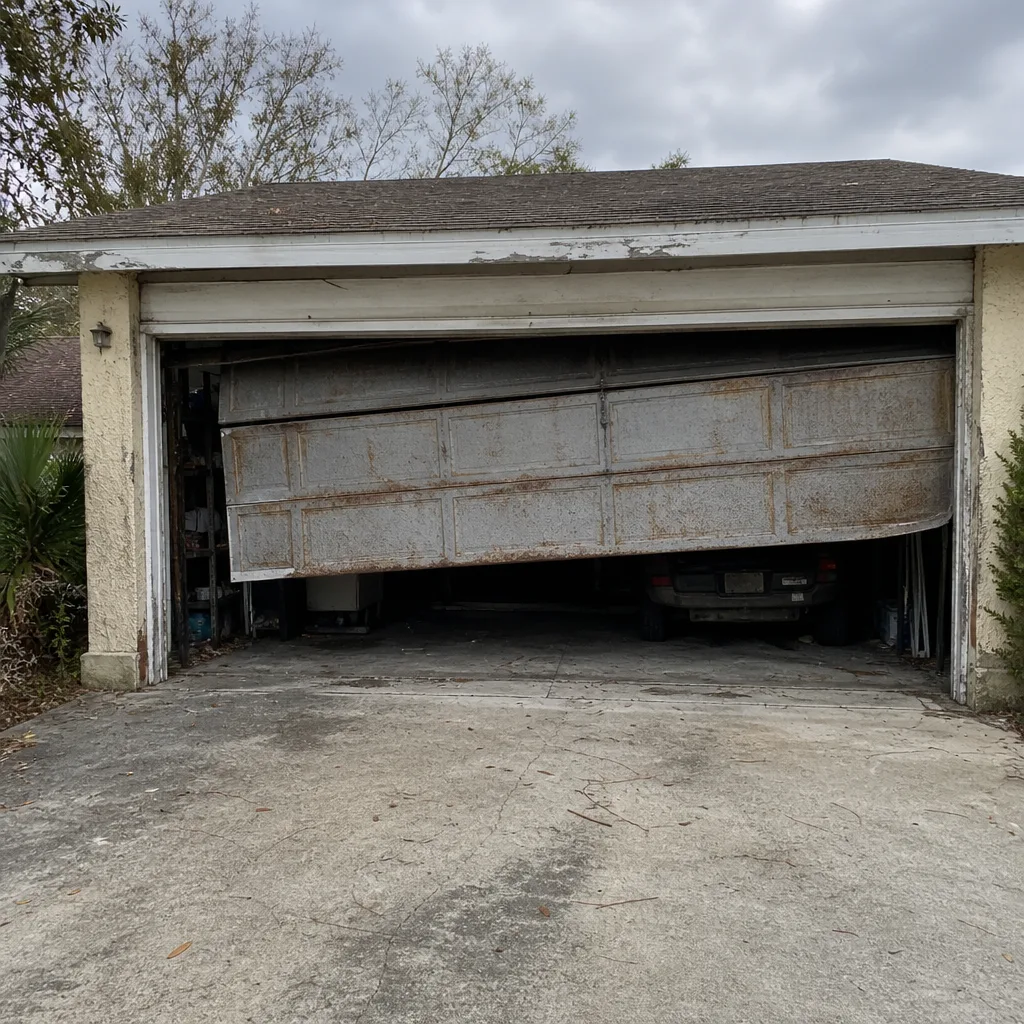 Before
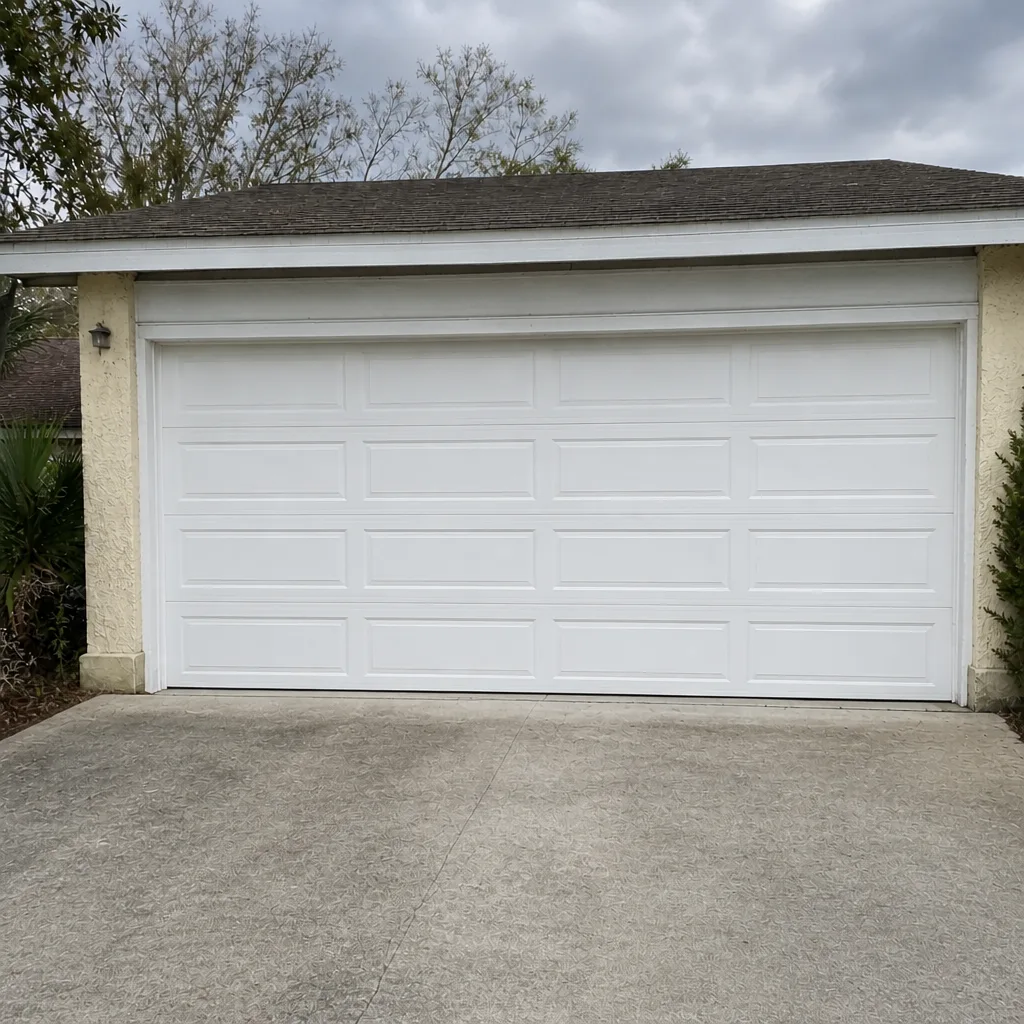 After
When to Call a Professional
Call a trained garage door technician, not a general handyman, when any of these apply:
- A torsion spring has snapped or visibly relaxed. Torsion springs are under very high tension and can cause serious injury when handled without the right tools and training. We never advise DIY spring work, even on older doors.
- The door is unbalanced: it goes up hard, comes down fast, or stops partway through travel. That points to a spring or cable issue, and cables under tension are dangerous too.
- A car has clipped the door and a section needs replacement. This is a parts-and-fit job that depends on the profile still being in production.
- Your opener is clicking but the door doesn’t move, or the safety eyes won’t reset. That’s an opener repair issue, and it’s often solved same-day.
- You’re replacing an old door. Measure, order, and installation need a visit, not a phone assessment, so we work from a written quote rather than a guess.
We work on garage doors in Mandarin all the time. Mandarin Garage Door Repair offers free estimates in Mandarin, and we can walk you through which brand and spec actually fits your opening. Call (833) 508-9952. We answer 24/7. Fast dispatch from 7am to 7pm, Sunday through Friday.
Frequently Asked Questions
For most Mandarin homes, Clopay and Amarr are the safest choices because their common residential profiles are actively produced and broadly supported by local distributors. Wayne Dalton’s Thermacore line is worth considering for insulation performance, but its proprietary hardware narrows the parts network. The “best” brand is the one whose profile is in production and whose hardware is standard.
No. Up north, R-value matters because it keeps heat in. In Mandarin, insulation matters because it keeps heat out of the garage in summer and reduces the AC load on the house through the shared wall. R-6 to R-9 is enough for most attached garages here, and it’s a meaningful upgrade from a non-insulated door.
Usually yes, with one condition: the opener’s lift capacity has to match the new door’s weight. If you’re moving from an uninsulated door to an insulated one, or from a single to a double, the opener may need replacing too. LiftMaster and Chamberlain are the simplest openers to source parts for in Mandarin, so keeping one is often the right call.
We work on all major brands, including LiftMaster, Chamberlain, Genie, Clopay, Amarr, Wayne Dalton, Craftsman, and Raynor. That’s most of what’s on homes in Mandarin, so we rarely run into a door or opener we can’t service. For more on the whole range we cover, see Mandarin Garage Door Repair.
It depends on the brand and the profile. Clopay and Amarr common profiles usually arrive within days through local distributors. Less common profiles and lines with narrower local parts support, such as some Wayne Dalton and CHI configurations, can take longer. We source parts directly to reduce third-party ordering delays, which shortens the wait when a section needs replacement.
Replacing a door like-for-like usually doesn’t, and a structural change to the opening may require a permit. Check with the City of Jacksonville building department for the specific scope of your project before work starts. Insurance requirements vary, so confirm with your insurer as well, before the work moves past ordering.
The Bottom Line
The brand on your garage door is one input among five, and it’s not the most important one. What actually matters in Mandarin is whether the panel profile is in production, whether the gauge and insulation are matched to your exposure, whether the door weight fits your existing opener, and whether the hardware is standard enough to source parts for over time. Clopay and Amarr are safe starting points on the supply-chain side. Wayne Dalton is a good door with a real proprietary-hardware tradeoff. Craftsman is a common legacy brand in Mandarin homes and often carries into replacement. Whichever you choose, get the written quote in full, verify the profile status, and match the opener before the door arrives. That’s the decision that has the biggest effect on your ten-year number.
If you’re weighing a new door for a Mandarin home, we can walk you through what actually fits your opening and your opener. For a full professional replacement, see garage door installation. Call Mandarin Garage Door Repair for a free estimate at (833) 508-9952. We answer 24/7. Fast dispatch from 7am to 7pm, Sunday through Friday.
Written by the team at Mandarin Garage Door Repair.