
Last updated November 21, 2026
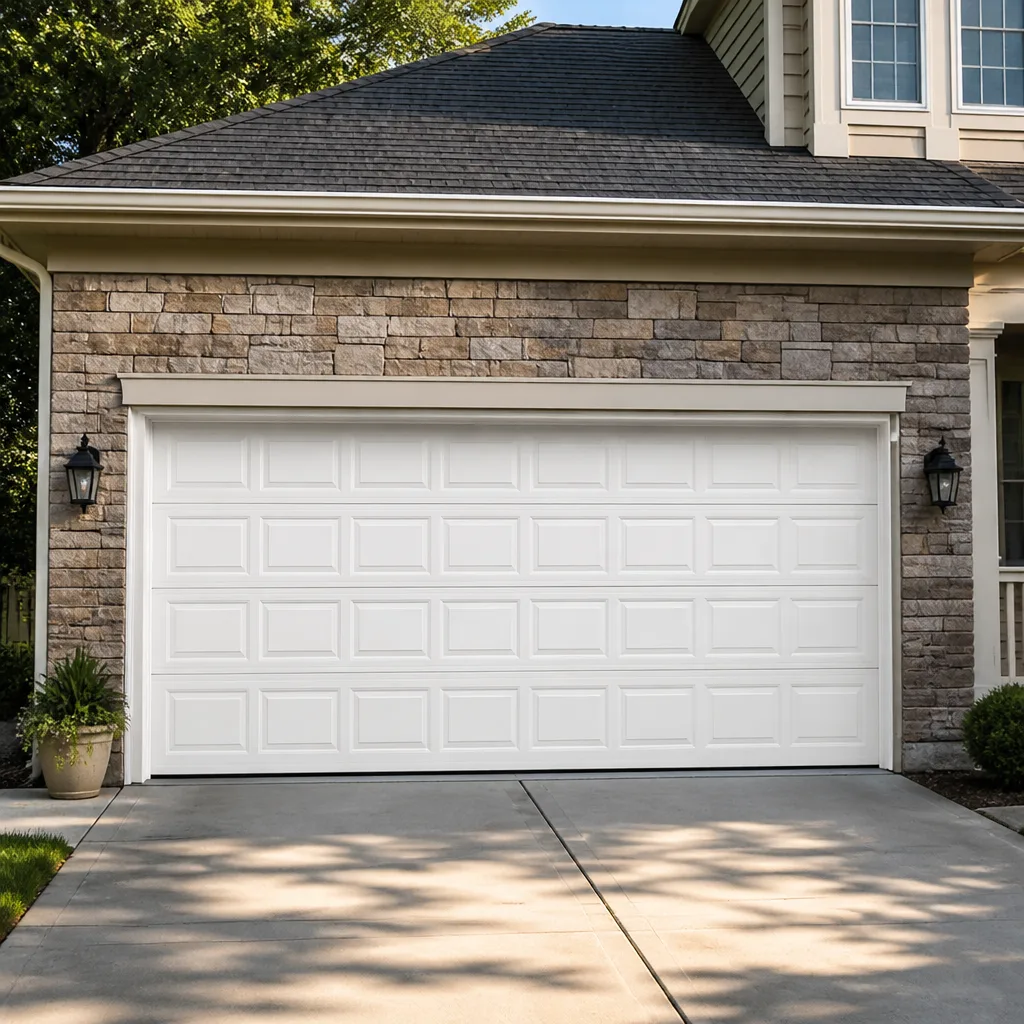 Raised-panel steel
 Carriage house
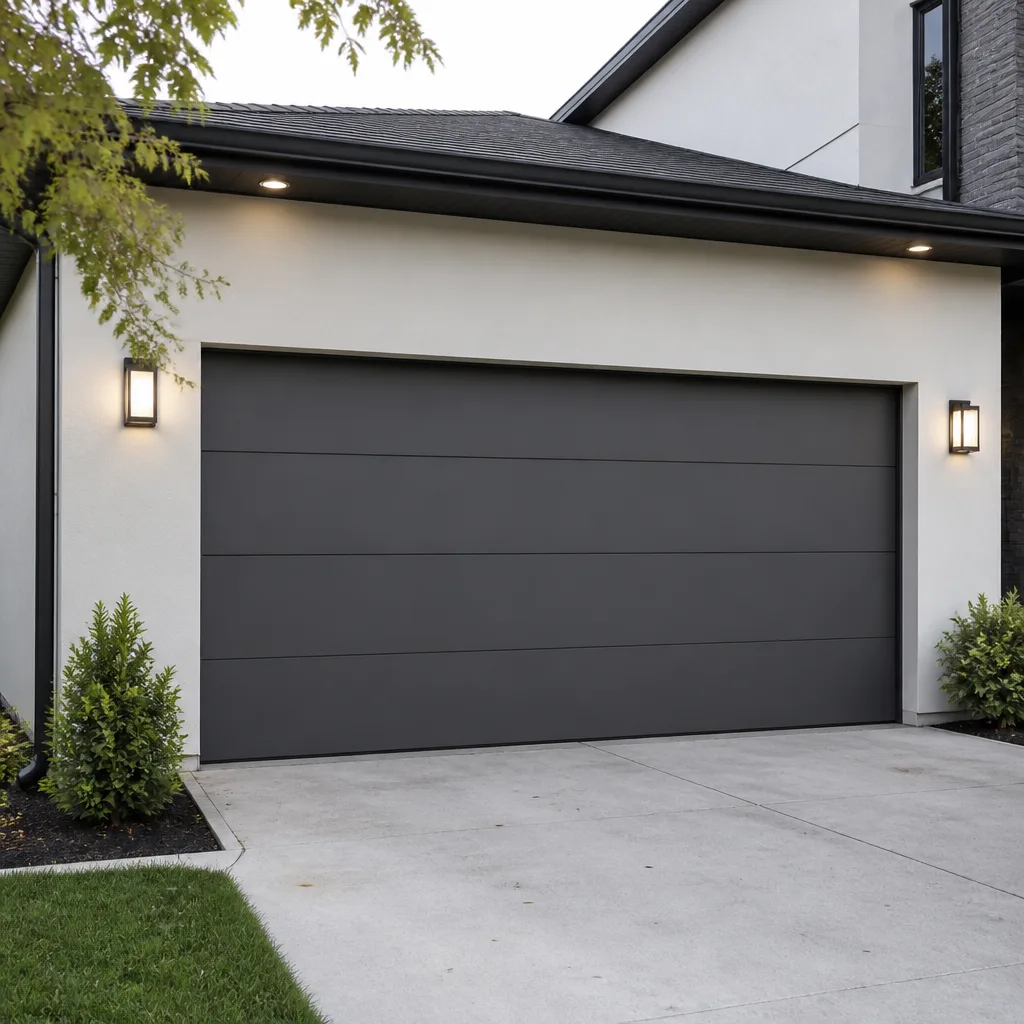 Modern flush
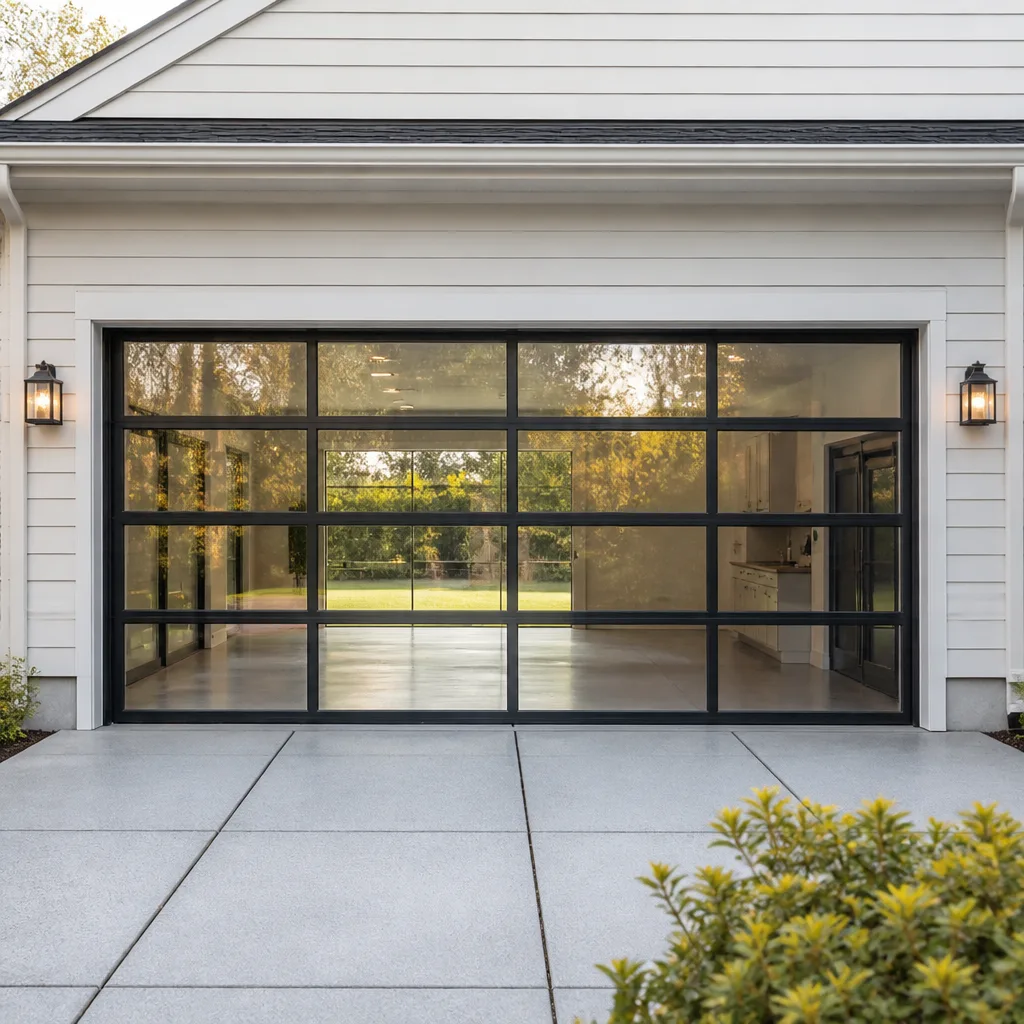 Full-view glass
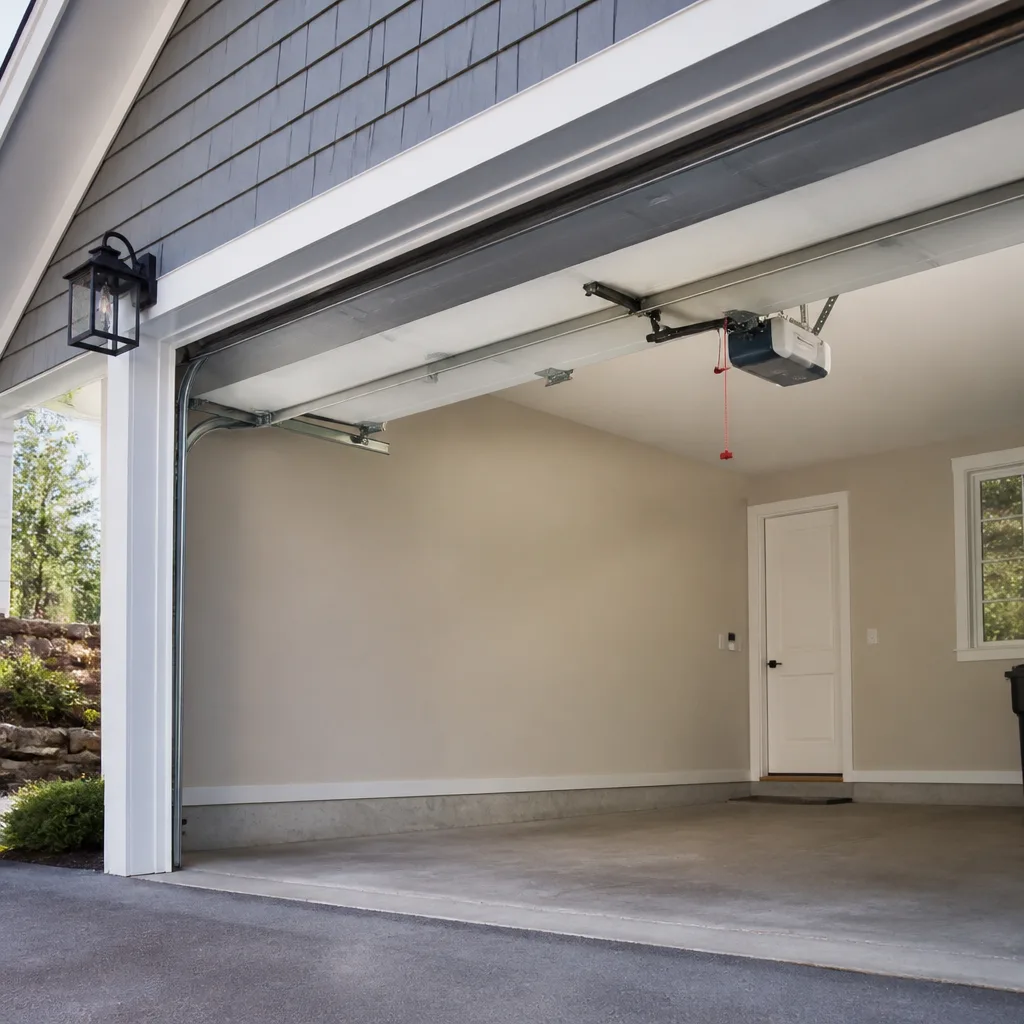 LiftMaster openers
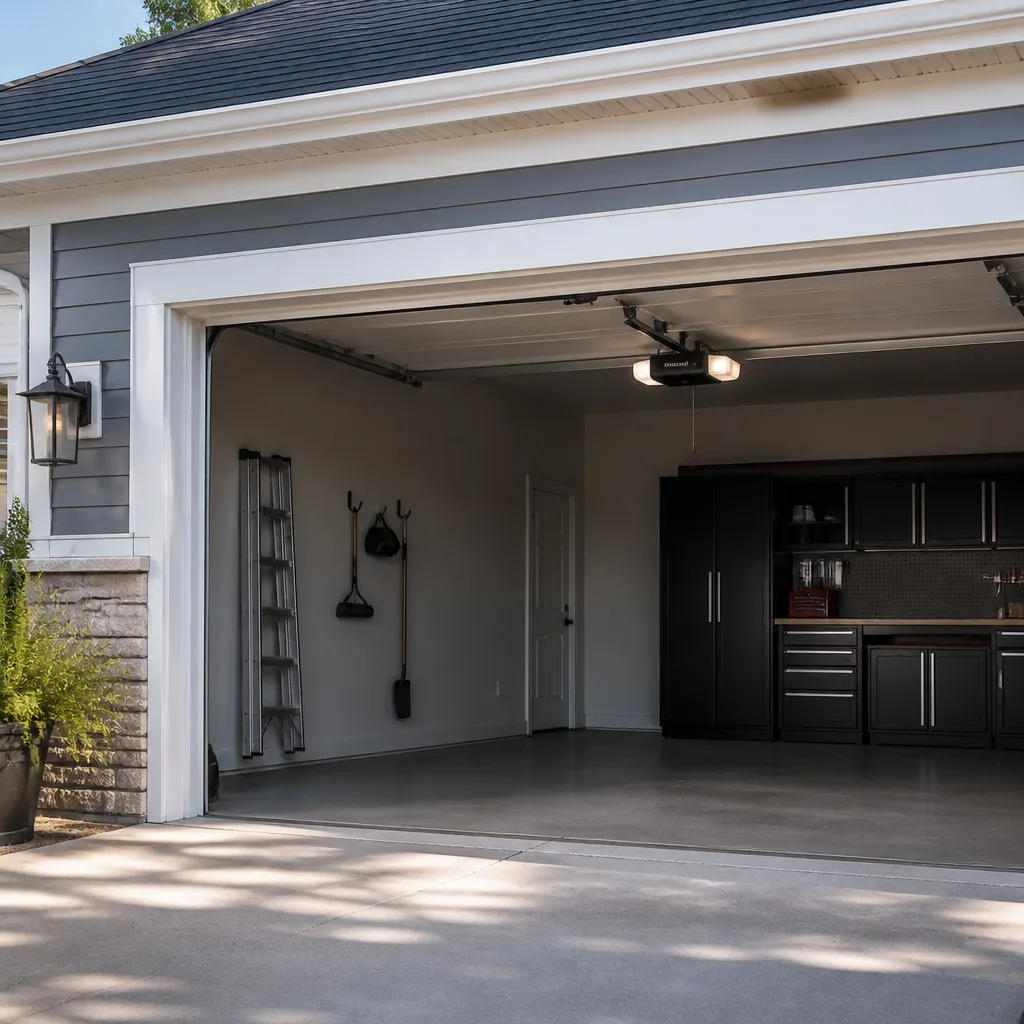 Chamberlain openers
Full 25-point door and opener safety check with every visit - springs, cables, rollers, tracks, and your LiftMaster or Chamberlain opener included
You get a price before we start. It does not change when the pro arrives.
Get your free estimateGarage Door Repair Maintenance Schedule: What to Do and When
Silicone spray on your tracks is one of the most repeated “maintenance tips” on the internet, and it’s one of the worst things you can do to a garage door. Silicone collects grit, the grit grinds against the rollers, and you’ve caused the exact wear you were trying to prevent. That single example tells you most of what you need to know: garage door maintenance isn’t about doing a little of everything once a year. It’s about the right task on the right part at the right interval. In this guide we’ll lay out a component-by-component schedule, what to lubricate and what to leave dry, the seasonal habits that matter in Mandarin, and the 30-second test that tells you your springs are wearing out.
Quick Answer
Inspect cables visually every six months, have torsion springs inspected annually, and replace rollers every 5-7 years if they’re steel or 10-12 years if they’re nylon. Lubricate hinges and rollers with lithium grease, give springs a light coat of a proper spring lubricant, and keep your tracks completely dry. Everything else on the door – opener, balance, weather seal, panels – gets checked on the same annual walkthrough so nothing passes two years without a look.
Styles & brands we work with
- Raised-panel steel
- Carriage house
- Modern flush
- Full-view glass
- LiftMaster openers
- Chamberlain openers
Table of Contents
- Why a Component Schedule Beats a Calendar Checklist
- The Six-Month Check: Cables and the Balance Test
- What to Lubricate and What to Keep Dry
- The Annual Walkthrough: Springs, Hardware, and Safety Features
- Roller Replacement: Steel vs. Nylon Timelines
- Mandarin Seasonal Notes: Summer Humidity and Afternoon Heat
- How to Log Maintenance So a Technician Reads Your Door’s History
- Frequently Asked Questions
Why a Component Schedule Beats a Calendar Checklist
Most maintenance guides are organized around the calendar: a spring checklist, a fall checklist, a monthly checklist. That structure is convenient to write and nearly useless in practice, because the parts of a garage door don’t wear on the same clock. A torsion spring cycles thousands of times a year and has a finite cycle life. A steel roller wears against the track at a completely different rate. The opener motor has its own duty cycle. Treating all of them as “annual maintenance” means you’re over-servicing some parts and under-inspecting others.
We build our maintenance approach around component lifespan instead. That means asking, for each part, two questions: how fast does this wear, and what does failure look like? Some answers are obvious. Cables fray before they snap, so a visual check catches them early. Some are less obvious. A torsion spring rarely gives a warning you can see – it just breaks – which is why spring inspection is about measuring wear indicators and confirming balance, not waiting for a symptom.
Here’s the interval summary we use when we walk a Mandarin homeowner through their door:
- Cables: visual check every 6 months
- Balance test: every 6 months, takes about 30 seconds
- Torsion springs: professional inspection annually
- Hinges and rollers (lubrication): every 6-12 months, light application
- Steel rollers (replacement): every 5-7 years
- Nylon rollers (replacement): every 10-12 years
- Opener: annual check of force settings, safety reversal, and chain or belt tension
- Weather seal and bottom rubber: annual visual, replace when cracking or gaps appear
If you only do one thing from this guide, do the balance test every six months. It’s the cheapest early-warning system a garage door has.
The Six-Month Check: Cables and the Balance Test
Twice a year, set aside fifteen minutes. The first job is a visual cable inspection. With the door closed, look at the cables running down each side. You’re checking for fraying strands, kinks, rust spots, and whether either cable sits unevenly in its drum. A cable that looks fuzzy or has broken strands is a cable that’s about to fail, and a snapped cable on a door under spring tension is a genuine safety event, not an inconvenience.
The second job is the balance test, and it’s the one homeowners skip because nobody explains it. Here’s how it works:
- Close the door and disconnect the opener using the release cord (the red handle).
- Lift the door by hand to about waist height, then to the halfway point.
- Let go. A healthy door holds its position, or drifts only slightly.
- If the door sinks on its own, the springs have lost tension. If it rises, they’re over-tensioned.
- Reconnect the opener when you’re done.
A door that won’t hold at halfway is telling you the springs are wearing. It doesn’t necessarily mean they’re about to break tomorrow, but it does mean the door is working the opener harder than it should, and that the spring system needs a professional look. We’ve seen plenty of Mandarin doors where the homeowner noticed the door “felt heavy” for months before anything failed – the balance test is what turns that vague feeling into a specific finding.
While you’re at it, check the photo-eye safety sensors at the bottom of the tracks. Wipe them clean and confirm the indicator light on each one is solid. Florida humidity fogs them, and spider webs across the lens are a common cause of a door that “randomly” reverses.
What to Lubricate and What to Keep Dry
This is where most well-intentioned maintenance does damage. The rule is simple: lubricate the parts that pivot and roll, keep the parts that guide dry.
Lubricate:
- Hinges: a small dab of lithium grease at each pivot point
- Rollers: a light application on the bearing, not the wheel surface
- Springs: a light coat of a proper spring lubricant to slow corrosion. This is inspection territory – if a spring looks dry or rust-flecked, have a technician look before you spray anything.
- Opener chain or screw drive: use the lubricant the manufacturer specifies, and only that
Keep dry:
- Tracks: never lubricate them. Tracks are guides, not bearings. Grease on a track attracts grit, and grit grinds the rollers flat. Wipe tracks clean with a dry cloth and leave them that way.
- Photo-eye lenses: clean, never coated
- Weather seal: clean with mild soap and water, no petroleum products
Less is more here. Over-lubricating rollers is just as damaging as ignoring them – excess grease migrates onto the track and turns into a grinding paste. A thin film on the bearing is the target. When we service a door in Mandarin, we’re often cleaning off years of accumulated spray before we can assess the actual wear.
The safety caveat matters: springs and cables are under high tension. Don’t attempt to adjust, tighten, or lubricate a spring that looks damaged, and never try to wind or unwind one yourself. That’s a job for a trained technician, and it’s the reason we treat garage door repair as a specialist trade rather than a general handyman task. High-tension spring repair done safely is a skill many generalists won’t take on.
The Annual Walkthrough: Springs, Hardware, and Safety Features
Once a year, the door deserves a proper inspection by someone who knows what wear looks like on your specific hardware. Whether your door is a Clopay, an Amarr, or a Wayne Dalton, the components are similar but the tolerances and hardware differ, and a technician who works on these brands every day will spot a worn bearing or a stretched spring faster than a generalist.
The annual walkthrough covers:
- Spring inspection: check for gaps in the coils, rust, and correct tension. This is a measurement job, not a look-and-guess job.
- Hardware torque check: hinges, brackets, and track fasteners loosen over a year of vibration. Loose hardware accelerates wear everywhere else.
- Track alignment: tracks should be parallel, plumb, and free of dents. A bent track is a roller-eater.
- Opener force and reversal test: the opener should reverse on contact with an obstruction. This is a safety check, not a convenience check.
- Panel and section inspection: hairline cracks, separating sections, and loose hinges are easier to address before they spread.
- Weather seal: check the bottom rubber and side seals for cracking, gaps, or flattening.
If your opener is a LiftMaster, Chamberlain, Genie, or Craftsman, the annual check also includes confirming the travel limits and force setting haven’t drifted – and if you notice the opener straining or reversing for no clear reason, that’s a cue to look at garage door opener repair rather than waiting for a full failure.
Roller Replacement: Steel vs. Nylon Timelines
Rollers are the most overlooked wearable part on a garage door, and the material tells you when to replace them. Steel rollers are durable and handle heavier doors well, but they wear faster against the track and get noisy as they go – plan on replacement every 5-7 years. Nylon rollers are quieter and gentler on the track, and they last longer, typically 10-12 years, though they can crack or flat-spot over time.
How do you know a roller is due? Listen and look:
- Noise: a grinding or rumbling sound as the door moves usually means a roller bearing has failed
- Flat spots: a roller that’s stopped turning and is sliding instead
- Visible wear: a groove worn into the roller surface, or a wobble in the stem
- Track contact: the door shimmying or binding on one side
Roller replacement is one of the highest-value maintenance tasks you can do, because worn rollers pass their wear onto the tracks and the hinges. That’s the component-schedule logic in action: replace a cheap part on time and you protect the expensive ones downstream. We keep a range of roller types on hand as part of our parts supply, which means you’re not waiting on a third-party order for a standard size.
While rollers are out, that’s the natural moment to check the hinges and the cable drums. A technician with the door open and the rollers off can inspect the whole system in one visit rather than three.
Mandarin Seasonal Notes: Summer Humidity and Afternoon Heat
Garage doors in Mandarin live in a specific climate, and the maintenance schedule should reflect it. Our winters are mild, so freeze-related wear isn’t the concern it is up north. What we deal with instead is humidity and heat, and they affect different parts of the system.
Post-summer humidity checks. By late summer, the hardware on a Mandarin door has been through months of high humidity. That shows up as surface corrosion on hinges, springs, and fasteners, and sometimes as rust blooming at the bottom of the door where moisture sits. This is the time to do a close visual pass on hardware – not just “does the door work” but “is anything starting to rust.” A light coat of the right lubricant on hinges and springs slows it down. If you see rust on a spring, have it inspected; corrosion is a contributing factor in spring failure.
Afternoon Florida heat and opener motor performance. Opener motors work harder in the heat. A motor pushed through a hot afternoon on a door that’s out of balance will run hot, and a thermal cutoff may trip. If your opener shuts down on hot afternoons and works fine in the morning, the heat isn’t the root problem – the door’s balance is. The balance test we covered earlier is the first thing to check. A door that’s fighting its springs makes the opener do work it wasn’t designed for, and heat just exposes it.
The seasonal rhythm that works in Mandarin looks like this: a spring balance and cable check in the cooler months, a humidity and corrosion pass in late summer, and an annual professional walkthrough whenever it fits your schedule. The climate shifts the emphasis, not the intervals.
How to Log Maintenance So a Technician Reads Your Door’s History
A maintenance log seems like busywork until the day something goes wrong. When a technician arrives to a door with a clear history, diagnosis gets faster and cheaper. When the history is “I think we replaced something a few years ago,” the technician has to rule out possibilities one at a time – which takes time you’re paying for.
Keep the log simple. A note on your phone or a sheet taped inside the garage works fine. For each event, record:
- Date of the service, repair, or inspection
- What was done – spring replacement, roller replacement, opener adjustment, lubrication
- Parts used – spring size and type if known, roller material, opener model
- Who did it – brand or company name is enough
- Anything noticed – “one hinge looked loose,” “door felt heavier after summer”
The parts line is the most valuable. If a spring was replaced, the size matters; if rollers were swapped, the material matters; if an opener was serviced, the model and brand matter. When we’re called to a door in Mandarin, the first thing we ask is what’s been done and when. A homeowner with a log gets a faster, more accurate answer, because we’re not starting from zero on a door we’ve never seen.
One practical tip: note the brand and model of your door and opener when you buy the home or have work done. LiftMaster, Chamberlain, Genie, Clopay, Amarr, Wayne Dalton, Craftsman, and Raynor all have different hardware conventions, and knowing yours up front saves a step on every future call. That’s also why single-trade focus matters – a technician who works on these brands every day recognizes the differences without a learning curve.
Common Mistakes to Avoid
- Spraying silicone on the tracks. This is the number-one bad habit we see. Silicone collects grit, the grit grinds the rollers, and you’ve accelerated the wear you were trying to prevent. Keep tracks clean and dry.
- Over-lubricating rollers and hinges. A thin film is enough. Excess grease migrates onto the tracks and the floor, and turns into a grinding paste as it picks up dust.
- Ignoring the balance test because the door still opens. A door that opens slowly or struggles in the heat is already telling you the springs are tired. Waiting for a break means paying for a repair on your schedule instead of a maintenance visit on yours.
- Trying to adjust springs or cables yourself. Torsion springs are under high tension and can cause serious injury. Don’t. That’s a trained-technician job every time.
- Replacing one roller when the whole set is worn. Rollers wear together. Swapping one leaves you back under the door in a few months for the next one.
- Skipping the humidity pass in late summer. In Mandarin, corrosion on hardware is a real seasonal issue. A five-minute visual check in late summer catches rust before it becomes a replacement.
- Never logging anything. A door with no history costs more to diagnose. Write down what was done, when, and with what parts.
See the difference
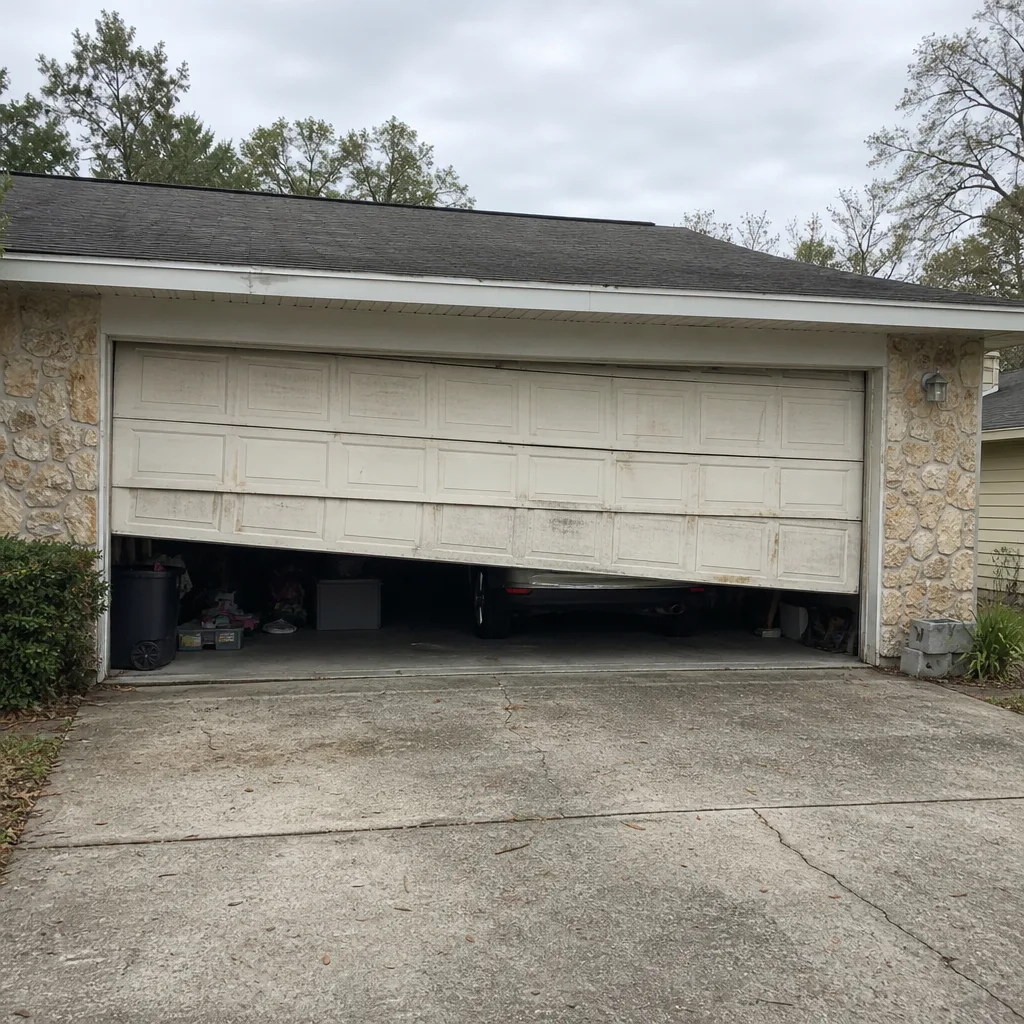 Before
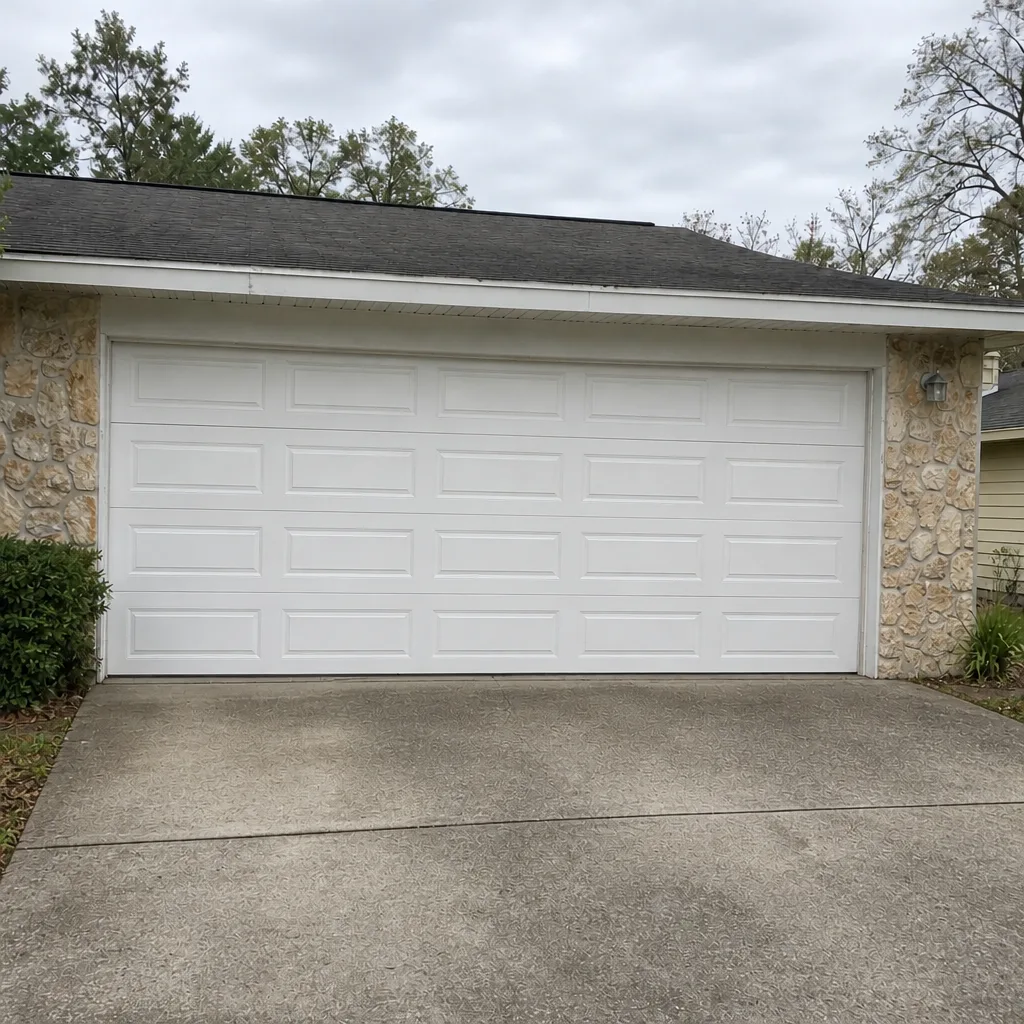 After
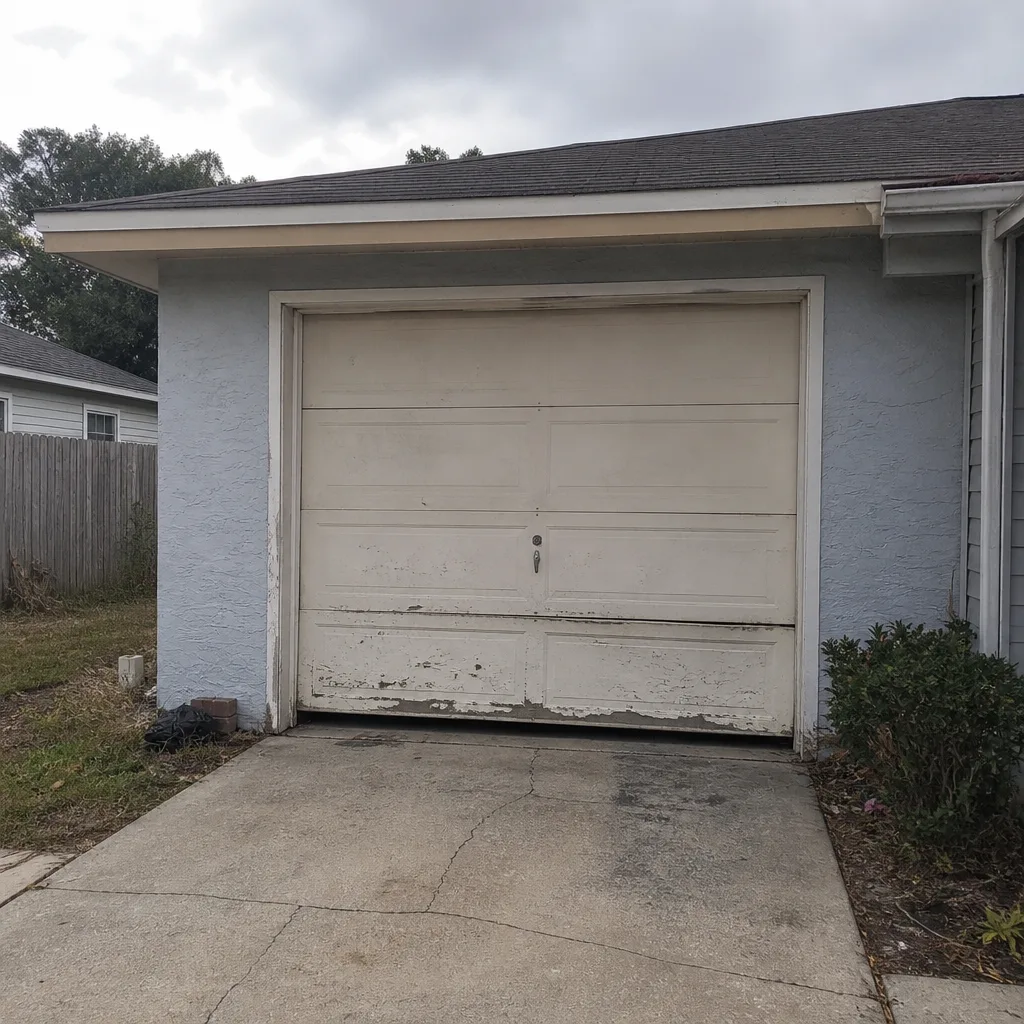 Before
 After
 Before
 After
When to Call a Professional
Some maintenance is homeowner territory: the balance test, keeping tracks clean, wiping sensors, checking the weather seal. But some situations call for a trained technician, and waiting makes them worse.
Call a professional if the balance test shows the door won’t hold at halfway, if a cable looks frayed or kinked, if you see rust or gaps in the spring coils, if the door shimmies or binds on one side, if the opener reverses for no reason or strains in the heat, or if a panel is cracked or a section is separating. Those aren’t DIY moments. Springs and cables under tension are a genuine injury risk, and a door that’s out of balance wears out everything attached to it.
Mandarin Garage Door Repair offers free estimates in Mandarin – call (833) 508-9952. We answer 24/7. Fast dispatch from 7am to 7pm, Sunday through Friday. From broken spring to full installation, we handle diagnosis, repair, opener service, parts, and new garage door installation in one place, so there’s no handoff to a second contractor. The written estimate sets the price, and we agree it with you before any work starts.
Frequently Asked Questions
Lubricate hinges and rollers every six to twelve months with a thin film of lithium grease, and give springs a light coat of a proper spring lubricant to slow corrosion. Tracks should never be lubricated – keep them clean and dry. Over-lubricating is as harmful as skipping it, because excess grease migrates to the tracks and collects grit. Call (833) 508-9952 if you’re unsure what your door needs – the estimate is free.
There’s no fixed calendar answer – springs are rated by cycles, not years, and how often you use the door drives the timeline. That’s why we recommend an annual professional spring inspection rather than a replacement schedule. The balance test every six months is your early warning: if the door won’t hold at halfway, the springs are losing tension and should be inspected. Call (833) 508-9952 for a free estimate in Mandarin.
The balance test tells you whether your springs are holding proper tension. Disconnect the opener, lift the door to halfway, and let go – a healthy door holds its position, one that sinks has weak springs, and one that rises is over-tensioned. It takes about 30 seconds and catches spring wear before it becomes a failure. Call (833) 508-9952 if your door fails the test – estimates are free.
No. Garage door tracks should stay dry and clean. Lubricant on a track attracts grit, and grit grinds the rollers and the track surface – the opposite of what you want. Wipe tracks with a dry cloth and leave them alone. If your door is binding or noisy despite clean tracks, the problem is likely rollers or balance; call (833) 508-9952 for a free estimate.
Hot afternoons make an out-of-balance door harder to move, and the opener runs hotter trying to compensate, which can trip its thermal cutoff. The heat isn’t the root cause – door balance and spring tension usually are. Test the balance first, and if the door won’t hold at halfway, have the springs inspected. Call (833) 508-9952 for a free estimate in Mandarin.
Rollers themselves are a replaceable part, but replacing them on a door that’s under spring tension requires care, and worn rollers often come with other issues – loose hinges, a bent track, or worn cables – that a technician should assess at the same time. If you’re not sure of the condition of the rest of the door, have it checked. Call (833) 508-9952 for a free estimate; the written estimate sets the price before any work starts.
The Bottom Line
Garage door maintenance works when you match the task to the component, not the calendar. Check cables and run the balance test every six months. Inspect springs annually. Replace steel rollers at 5-7 years and nylon at 10-12. Lubricate hinges and rollers lightly, coat the springs, and keep the tracks dry. In Mandarin, add a late-summer humidity and corrosion pass, and treat a door that struggles in the afternoon heat as a balance problem rather than a motor problem. Log everything so a technician can read your door’s history. And leave the springs and cables to a trained technician – that’s the one part of the schedule that isn’t yours to do. If you want the full walkthrough done by someone who works on doors every day, we’re Mandarin Garage Door Repair, and garage doors are all we do. Call (833) 508-9952 for a free estimate. We answer 24/7. Fast dispatch from 7am to 7pm, Sunday through Friday.
Written by the team at Mandarin Garage Door Repair.